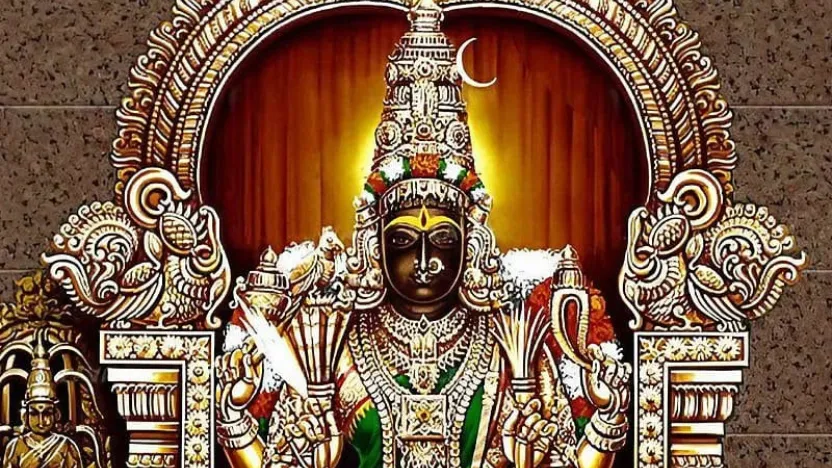
The fourth Friday of the sacred Tamil month of Aadi holds immense spiritual significance for devotees of Goddess Kamakshi Amman. Considered one of the most auspicious Fridays of the month, this day is dedicated to seeking the blessings of the Divine Mother, who embodies love, wisdom, prosperity, and supreme feminine energy (Shakti).
Across Tamil Nadu and among Hindu communities worldwide, thousands of devotees observe special prayers, offer flowers, light ghee lamps, and perform pujas to Goddess Kamakshi, praying for harmonious marriages, family well-being, prosperity, and spiritual fulfilment.
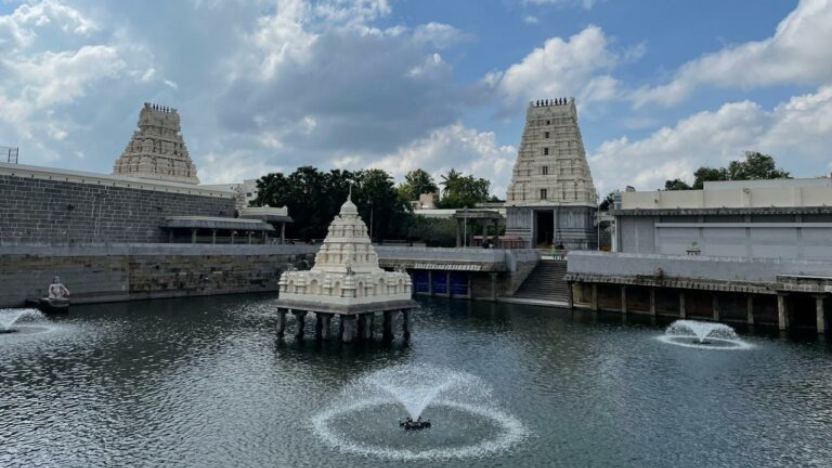
Located in the ancient temple city of Kanchipuram, Tamil Nadu, Sri Kamakshi Amman Temple is one of the most revered Shakti temples in India. Built during the Pallava dynasty in the 6th century AD, the temple spans nearly five acres and is regarded as one of the 51 sacred Shakti Peethas.
According to Hindu tradition, this is the holy place where the navel (Nabhi) of Goddess Sati fell, making it one of the most powerful centres of divine feminine energy. Kanchipuram is also recognised as one of the Saptha Mokshapuris, the seven sacred cities believed to grant liberation (Moksha).
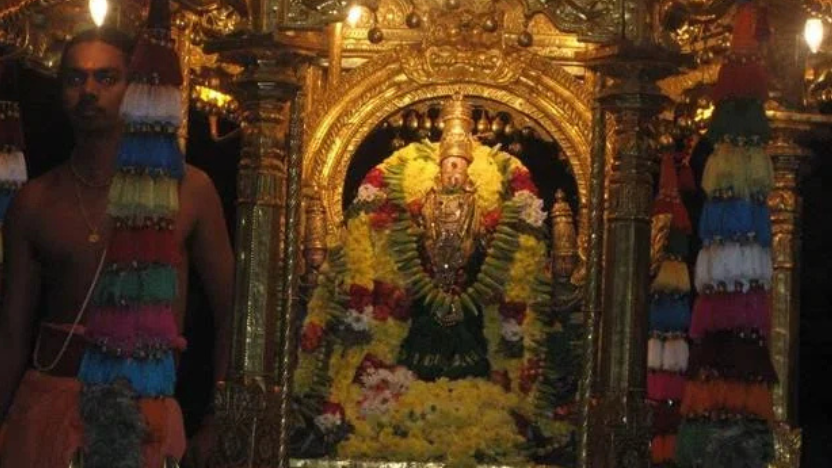
Who is Goddess Kamakshi?
Goddess Kamakshi is worshipped as an incarnation of Goddess Parvati and is revered as the compassionate Mother who grants wisdom, prosperity, fertility, and auspiciousness.
The name "Kamakshi" carries profound spiritual meaning :
"Ka" represents Goddess Saraswati, the embodiment of wisdom and knowledge.
"Ma" represents Goddess Lakshmi, the goddess of wealth and prosperity.
"Akshi" means "eyes."
Together, Kamakshi is the Divine Mother whose compassionate eyes embrace all creation. Another interpretation explains that she is the one who governs and transforms human desires, guiding devotees towards inner peace and spiritual fulfilment.
According to Hindu mythology, the powerful demon Bhandasura received extraordinary boons that made him nearly invincible. Misusing his powers, he spread fear and suffering across the three worlds.
Unable to defeat him, the Devas sought the help of Lord Shiva, who directed them to Goddess Shakti. Taking the divine form of Kamakshi Amman, Goddess Parvati waged a fierce battle against Bhandasura and ultimately destroyed him, restoring peace and righteousness.
After her victory, Goddess Kamakshi chose to reside in Kanchipuram. Another cherished legend tells of Goddess Kamakshi performing intense penance beneath a sacred mango tree, where she lovingly fashioned a Shiva Lingam from sand and worshipped Lord Shiva with pure devotion.
To test her faith, Lord Shiva transformed himself into the overflowing Kampa River, whose waters threatened to wash away the sand Lingam. Refusing to let her prayers be disturbed, Goddess Kamakshi embraced the Lingam with all her heart, protecting it from the rushing waters.
Moved by her unwavering devotion and unconditional love, Lord Shiva appeared before her and accepted her as his divine consort. This sacred legend has made Kamakshi Amman a beloved deity among devotees praying for successful marriages, lasting relationships, and family harmony.
The Fridays of Aadi are dedicated to the worship of the Divine Mother, and the fourth Friday holds a particularly special place for devotees of Goddess Kamakshi. On this sacred day, devotees believe that sincere prayers offered to the Goddess can remove obstacles, bless families with prosperity, strengthen relationships, and bring peace of mind. Many unmarried devotees also seek her blessings for a suitable life partner, inspired by the Goddess' own divine union with Lord Shiva.
Women often observe fasting, decorate their homes with kolams, light ghee lamps, and offer turmeric, kumkumam, flowers, coconuts, fruits, and sweet offerings while chanting Lalitha Sahasranamam, Lalitha Trishati, or the Kamakshi Gayatri Mantra.
Inside the sanctum of the temple, Goddess Kamakshi is seated gracefully in Padmasana (Lotus Posture), symbolising perfect peace and supreme consciousness.
She holds four sacred objects in her hands:
- A sugarcane bow, representing the mind.
- Five flower arrows, symbolising the five senses.
- A noose (Pasha), representing love and compassion.
- A goad (Ankusha), symbolising self-control and spiritual discipline.
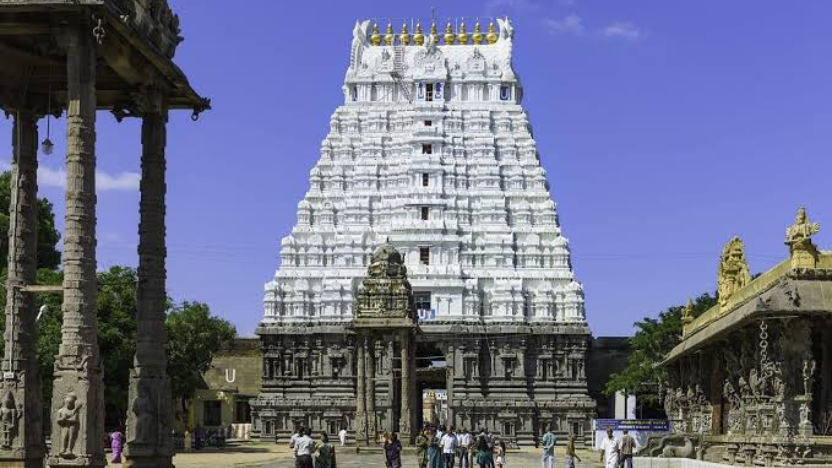
A parrot accompanies the Goddess, representing wisdom, beauty, and divine speech.
Unlike many Shiva temples in Kanchipuram, where Goddess Shakti has separate shrines, Kamakshi Amman alone is worshipped as the supreme Divine Mother of the city. It is believed that all other temples in Kanchipuram face towards her, acknowledging her as the central source of divine energy.
The temple is also home to the sacred Sri Chakra (Kamakoti Yantra), believed to have been consecrated by Adi Shankaracharya. Tradition holds that Goddess Kamakshi originally manifested in a fierce form, and through the installation of the Sri Chakra, her energy became one of boundless compassion and benevolence.
Devotees believe that her compassionate gaze fulfils sincere prayers, removes suffering, grants prosperity, and guides devotees towards spiritual enlightenment.
Source / Image Credit : AlightIndia.com , Tirupati Helps , thesouthfirst , The Hindu Heritage
You may be interested in
Royal Heritage Embroidered Anarkali Gown for Women | Premium Festive Wear by RANGOLI BAZAAR

Ready stock lotus design indian saree

Indian Wedding Forehead Netti Pattam & Hand Wrist Pattam Gold Plated Traditional Bridal Ceremony Set
Bollywood Style 1 Pair Of Earrings + 1 Necklace Vintage Jewelry Set Retro Design Inlaid Gemstone Match Daily Outfits Party Accessories