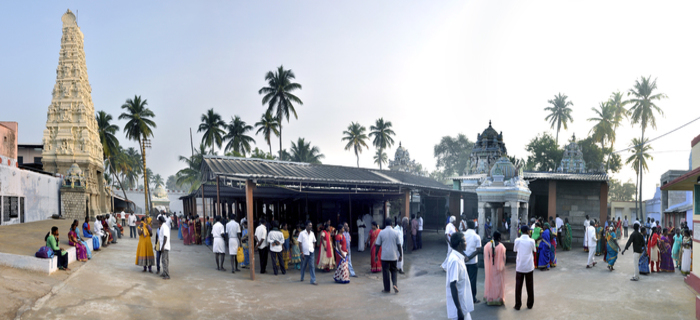

In the sacred town of Annur stands the revered Arulmigu Manneeswarar Temple, a powerful abode of Lord Shiva where devotees believe that sins accumulated across generations can be washed away through sincere prayer.
Though the exact origins of the temple remain uncertain, it is widely believed that it was built nearly 500 years ago by the righteous King Manuneethi Cholan, a devoted follower of Lord Shiva. Temple tradition says the king received a divine vision instructing him to build a shrine at a sacred spot chosen by the Lord Himself.
At the heart of the temple stands the Swayambumurthi, a self-manifested Shivalinga that is believed to have emerged from the earth. Unlike most temples, the presiding deity faces west, a rare and powerful orientation that signifies direct grace upon devotees who seek forgiveness.
The Shivalinga bears a visible scar, believed to have been caused by a hunter’s weapon. On either side of the Linga are wing-like formations symbolising Garuda, signifying that the Lord is ever watchful of our actions both good and bad.
The story of this temple is deeply moving. Long ago, the region was covered in dense valli creepers. A hunter named Anni lived in this forest, surviving by hunting animals. Though he knew that taking life carried sin, poverty forced him to continue.
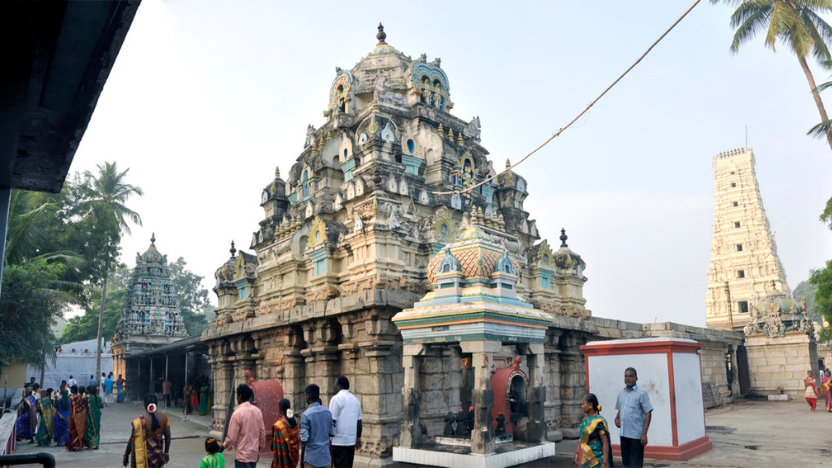
One day, unable to find any prey, he began digging for valli roots. No matter how much he cut, the root seemed endless. As he dug deeper, he saw blood flowing from the earth. Frightened, he heard a divine voice declaring that his sins had been pardoned. When the king later arrived at the spot, he discovered a Shivalinga beneath the soil. Despite trying to pull it out with chains and even an elephant, the Linga would not move. That night, Lord Shiva appeared in the king’s dream and instructed him to leave the Linga where it stood, as it was His chosen abode. Obeying the divine command, the king built the temple at that very place.
From that day onwards, the temple became a sacred space of repentance and redemption.
Devotees firmly believe that lighting 21 lamps and performing 21 pradakshinas around the sanctum can cleanse the sins of 21 generations, both ancestors and descendants. This belief reflects the understanding that karma does not belong to one lifetime alone. The actions of forefathers, knowingly or unknowingly, may continue to influence their lineage. At Manneeswarar Temple, devotees pray not only for themselves, but also for their ancestors, seeking liberation from inherited karmic burdens.
It is said that Lord Manneeswarar graces devotees in the form of sand under the Kailasa Vimana within the sanctum, symbolising His eternal presence from the very earth itself.
The temple also houses shrines for Bhairava, Guru Bhagwan, Nataraja, Muruga with Valli and Deivanai, Anjaneya, the Nalvar saints who sang the Thevaram and Tiruvasagam, and Tiruneelakanda Nayanar. Under the sacred valli tree, seven Nagar idols are installed, believed to bless families with protection and continuity of lineage.
Major festivals such as Margazhi Brahmotsavam, Chithirai and Vaikasi Pujas, and Maha Shivaratri are celebrated with deep devotion. On these sacred days, devotees gather to seek forgiveness, peace and spiritual upliftment.
For many, visiting Arulmigu Manneeswarar Temple is not just a ritual. It is a journey of surrender. It is a prayer whispered for one’s ancestors. It is a plea for karmic cleansing. Above all, it is a reminder that no sin is beyond redemption when repentance is sincere.
In the silent presence of Lord Shiva at Annur, devotees believe that generations of burdens dissolve and divine grace flow endlessly.
Source : newindianexpress , gosthala