

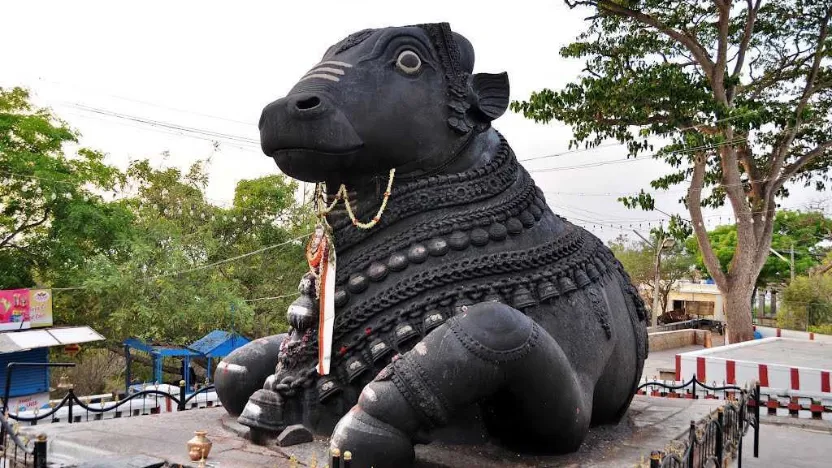
Long before Bengaluru became India's bustling technology capital, the area now known as Basavanagudi was a quiet farming settlement called Sunkenahalli. The villagers depended entirely on their crops for survival. Season after season, they cultivated groundnuts on the fertile land, hoping for a good harvest that would feed their families and sustain their livelihoods.
But according to local legend, everything changed when an unexpected visitor arrived. One day, a large wild bull wandered into the fields and began feasting on the farmers' precious groundnut crops.
At first, the villagers tried to chase it away. But the animal kept returning, destroying more crops each time. The farmers watched helplessly as months of hard work disappeared before their eyes.
Eventually, one frustrated farmer lost his temper. Unable to bear the destruction any longer, he struck the bull with a wooden club.
What happened next left everyone speechless. Instead of running away, the bull reportedly sat down exactly where it stood. Then, before the eyes of the villagers, it became completely motionless.
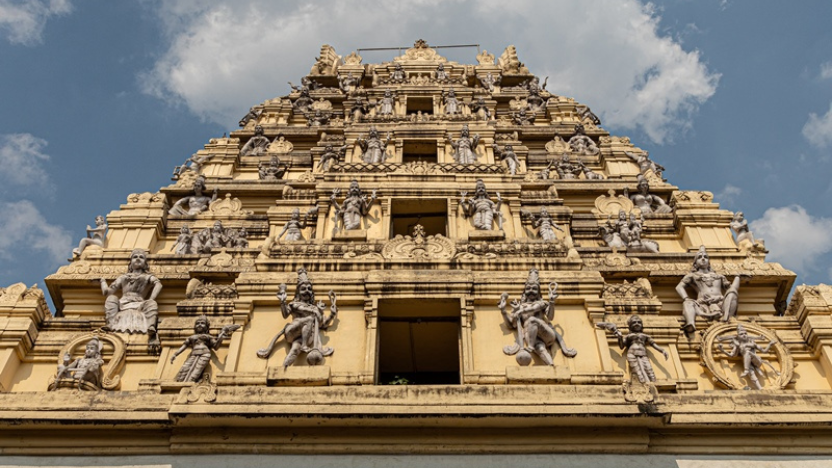
The bull had turned into stone. The villagers believed the event was no ordinary occurrence. However, their astonishment soon turned into fear.
According to the legend, the stone bull did not remain the same size. Over time, it began growing larger and larger.
The people worried that if it continued expanding, it could one day consume the entire area. Desperate for help, they turned to Lord Shiva.
The villagers prayed for guidance and eventually placed a sacred trident on the forehead of the stone bull. It is believed that this divine act stopped the bull from growing any further.
To honour and appease the sacred animal, a small shrine was built around it. Years later, Bengaluru's founder, Kempe Gowda, expanded the site into the magnificent temple that stands today.
Today, the Bull Temple houses one of the largest monolithic Nandi statues in India. Carved from a single massive rock, the statue measures approximately 4.5 metres in height and 6.5 metres in length.
Standing before it, visitors often find themselves wondering how such an enormous sculpture was created centuries ago. Yet for many devotees, the true wonder lies not in the size of the statue, but in the story behind it.
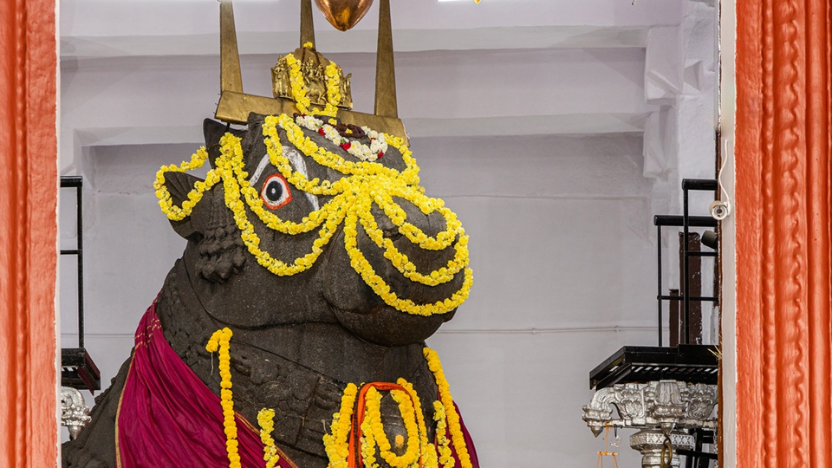
The connection between the temple and groundnuts continues even today. Because the legendary bull once roamed through groundnut fields, local farmers began offering groundnuts to Nandi as a sign of respect and gratitude.
Over time, this tradition evolved into the famous Kadalekayi Parishe, or Groundnut Fair, held annually around November and December. Thousands of devotees and visitors gather during the festival, turning the temple area into a vibrant celebration of faith, culture and community.
Another fascinating belief associated with the temple is that a sacred spring originates beneath the feet of the giant Nandi. Many devotees believe this spring became the source of the Vrishabhavathi River, which flows through Bengaluru.
Whether viewed as faith, folklore or history, the legend adds another layer of mystery to the temple's enduring appeal.
Located nearby is the famous Bugle Rock, a geological formation estimated to be over three billion years old. Historical accounts state that watchmen once stood atop the rock each evening, sounding bugles and displaying torches to signal that the city was safe.
Together, the Bull Temple and Bugle Rock form an important part of Bengaluru's cultural and historical identity.
For devotees, however, the heart of the story remains the giant stone, Nandi.
A bull that arrived unexpectedly. A village that feared its growing power. And a legend that continues to be told centuries later.
Even today, visitors who stand before the enormous stone Nandi often leave with the same question:
Was it merely a statue, or was there truly something divine about the bull that would not stop growing?
Source : Kevinstandagephotography , Sachin N Kamath