
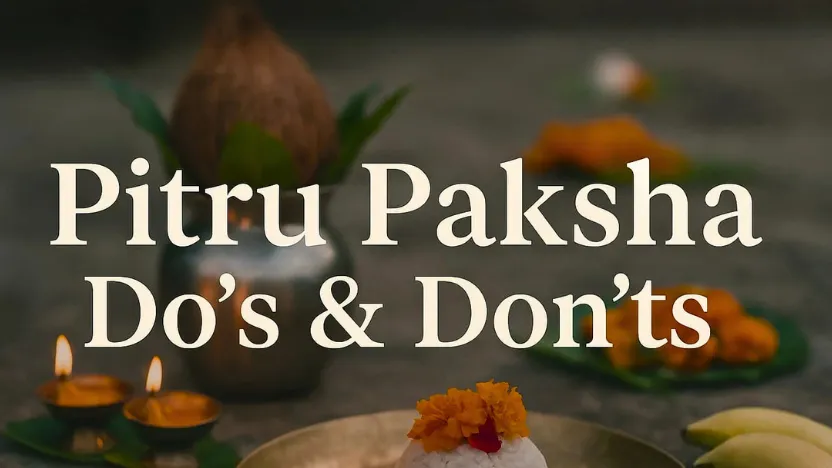
From 27 September to 10 October, many Hindu families will observe Pitru Paksha, a sacred period dedicated to remembering and honouring departed ancestors.
For many families, these days are not simply about rituals. They are a time to pause, remember the people who came before us, express gratitude and offer prayers for their ancestors.
The observance concludes with Sarva Pitru Amavasya, also known as Mahalaya Amavasya, on 10 October 2026. Some calendars separately observe Purnima Shraddha on 26 September. So, what can devotees do during Pitru Paksha?
1. Remember your ancestors with prayers
The heart of Pitru Paksha is remembrance. Families traditionally perform Shraddha and Tarpanam according to the appropriate tithi of the departed ancestor. If the exact tithi is unknown, Sarva Pitru Amavasya is traditionally observed as a day to remember ancestors collectively.
If you are unsure about the correct day or procedure, it is best to consult your family purohit or follow your family tradition.
2. Offer Tarpanam
Tarpanam involves offering water while remembering and honouring one's ancestors.
The ritual may differ according to family and regional tradition, so devotees should follow the method taught by their purohit rather than assuming that one procedure applies to everyone.
3. Prepare a simple, sattvic meal
Many families prepare a fresh vegetarian meal as part of their observance. The food is kept simple and prepared with care and devotion. Depending on family tradition, certain ingredients such as onion, garlic, eggs and non-vegetarian food may be avoided.
The intention is not about preparing an elaborate feast, but about making the offering with sincerity.
4. Share food and practise charity
Food offerings and charity are an important part of many Pitru Paksha traditions. Families may offer food according to their customs and share meals or donations with those in need. Annadanam can become a meaningful way of turning remembrance into an act of kindness.
5. Offer food to animals according to tradition
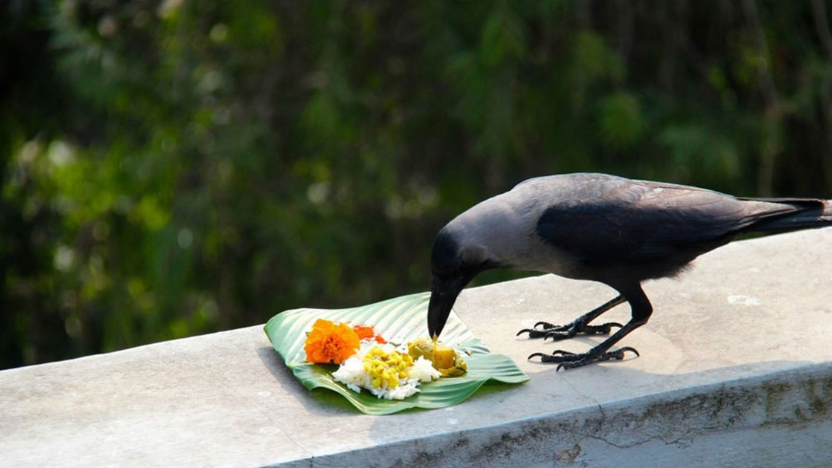
In many traditions, food is offered to crows, cows and dogs during Pitru Paksha. The crow in particular has a strong symbolic association with ancestral offerings in Hindu traditions. These practices are understood as expressions of remembrance and respect for one's ancestors.
A simple act of feeding an animal can therefore become part of the day's remembrance.
6. Keep the day peaceful
Pitru Paksha is traditionally approached as a period of remembrance rather than celebration. Many families choose to keep their surroundings peaceful, wear clean and modest clothing, maintain personal discipline and spend some time in prayer or reflection.
You don't need to make the observance complicated. Sincerity and respect are at the heart of the practice.
What should you avoid?
Customs differ between families, but some traditional practices commonly associated with Pitru Paksha include:
- Avoiding alcohol, tobacco and intoxicants
- Avoiding non-vegetarian food during the observance, where this is part of family tradition
- Keeping the atmosphere peaceful rather than focusing on celebrations
- Avoiding unnecessary extravagance
- Following the family's customary restrictions on grooming, purchases or auspicious ceremonies where applicable
- Avoiding arguments, disrespect and behaviour that goes against the spirit of remembrance
Importantly, not every Hindu family follows the same list of restrictions. There can be significant differences between regional, community and family traditions.
Why are crows, cows and dogs associated with Pitru Paksha?
This is one of the practices many people notice during Pitru Paksha. Traditionally, food may be offered to a crow, cow or dog before the family eats. These animals carry different symbolic meanings across Hindu traditions and are associated with ideas of ancestors, compassion, protection and giving.
Rather than seeing the practice simply as “feeding animals”, devotees can understand it as an opportunity to remember those who came before them while extending kindness to living beings.
What if you don't know your ancestor's tithi?
Don't panic. The Shraddha date is traditionally determined by the lunar tithi on which the person passed away, rather than simply using the Gregorian calendar date. If the tithi is unknown, Sarva Pitru Amavasya on 10 October is traditionally used by many families to remember all ancestors. For the correct ritual and timing, check with your family purohit or a trusted local temple.
What’s the meaning of Pitru Paksha?
At its heart, Pitru Paksha is about gratitude. Before we became who we are, there were generations who came before us. Their stories, sacrifices, values and memories became part of the lives we live today.
So, during these sacred days, take a moment to remember them. Offer water. Say their names. Prepare food with love. Feed someone who is hungry. Give what you can. Pray sincerely. The rituals may be simple, but the feeling behind them can be profound.
Pitru Paksha reminds us that even when our loved ones are no longer physically with us, remembrance can keep their place in our lives alive.
Source / Image Credit : astrojanampatrika , onlinejyotish , Karnataka Temple , rudralife , jyotishgram
You may be interested in

Ethnic Retro Corful Peacock Jhumka Earrings Womens Indian Jewelry Flower Gold Bell Tassel White Pearl Earrings

Royal Heritage Embroidered Anarkali Gown for Women | Premium Festive Wear by RANGOLI BAZAAR

Ready stock lotus design indian saree

Bollywood Style 1 Pair Of Earrings + 1 Necklace Vintage Jewelry Set Retro Design Inlaid Gemstone Match Daily Outfits Party Accessories