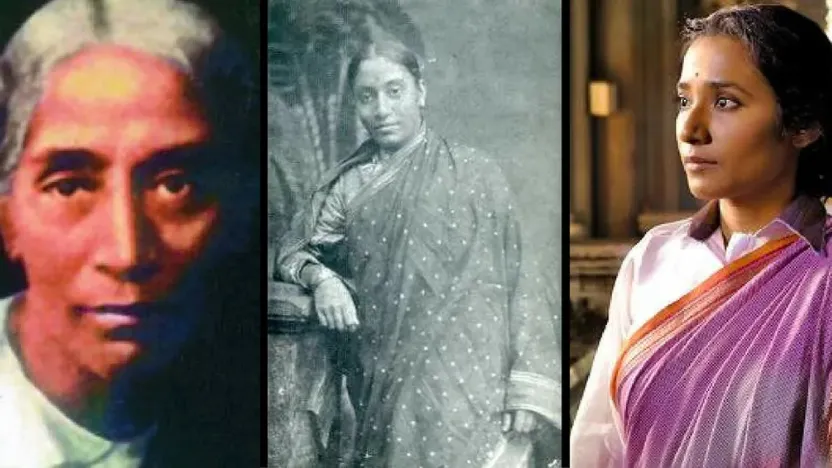
"I would rather go to prison than live a life I did not choose."
Those words, spoken by a young Indian woman in the 1880s, challenged centuries of tradition and changed the course of history.
Imagine being married at just 11 years old and growing up knowing that one day, society expected you to leave your home and spend the rest of your life with a man you never chose.
Now imagine having the courage to say no. More than 140 years ago, when women's voices were rarely heard and their choices were often ignored, one young woman dared to challenge a system that had existed for generations. Her name was Rukhmabai, and her decision to refuse a child marriage would forever change the conversation about women's rights in India.
Born in Bombay (now Mumbai) in 1864, Rukhmabai was married at the age of 11 to a man eight years older than her, as was common during that era. But unlike many girls of her time, she was fortunate to have a mother and stepfather who believed in education.
Instead of moving into her husband's home, she remained with her family and continued her studies. Years later, when her husband demanded that she begin married life with him, Rukhmabai made a decision that shocked society.
She refused. What followed became one of the most famous legal battles in Indian history. Her husband filed a case demanding that the court force her to live with him. Initially, a judge ruled that no woman should be compelled to live in a marriage she had entered as a child. But after an appeal, another court ruled against her.
Rukhmabai was given an impossible choice. Return to her husband or go to prison. Without hesitation, she chose prison.
Her courage sparked fierce debates across India and Britain. Newspapers followed every development. Religious leaders, reformers, politicians and ordinary citizens all weighed in on the case.
But Rukhmabai was never fighting only for herself. She understood something revolutionary for her time that consent mattered. While the courtroom battle continued, she found another powerful weapon: her words.
Writing anonymously under the name "A Hindu Lady" in The Times of India, Rukhmabai openly questioned child marriage, gender inequality and the lack of freedom given to women. Her letters challenged deeply rooted customs and encouraged society to rethink what justice truly meant.
"The brutal custom of child marriage had deprived all happiness of my life," she once wrote.
Her honesty resonated with thousands. Support for her grew rapidly, leading to the formation of the Rukhmabai Protection Committee, backed by some of India's most respected social reformers.
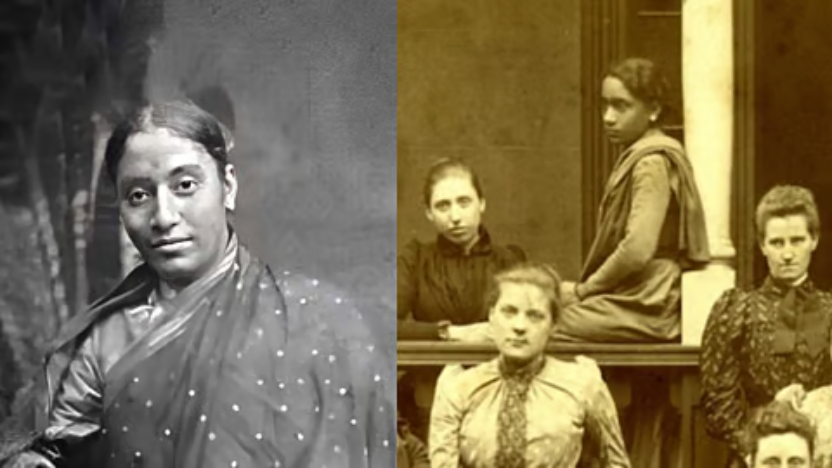
The case even attracted international attention. According to historical accounts, Queen Victoria became aware of Rukhmabai's struggle. Eventually, a settlement was reached in 1888 that dissolved the marriage, allowing her to reclaim her future. Her victory became far more than a personal triumph.
It helped shape public opinion and contributed to the passing of the Age of Consent Act in 1891, one of the earliest legal reforms aimed at protecting young girls from child marriage. For many, that would have been the end of an extraordinary story. For Rukhmabai, it was only the beginning.
Determined to fulfil a dream that once seemed impossible, she travelled to England to study medicine. She trained at the London School of Medicine for Women before completing her medical education and returning to India.
She went on to become one of the country's first practising female doctors trained in Western medicine. For more than three decades, she served women and children as Chief Medical Officer at hospitals in Surat and Rajkot, dedicating her life to improving healthcare at a time when women often had little access to medical treatment.
Her work eventually earned her the prestigious Kaiser-i-Hind Medal for public service. Yet perhaps her greatest legacy lies beyond medicine. Long before words like "women's empowerment," "gender equality," or "consent" became part of everyday conversations, Rukhmabai was already living those principles.
She proved that education could challenge oppression and proved that one voice could influence laws. And she proved that courage is often born from simply refusing to accept injustice.
Today, generations of Indian women study, work, vote, choose their partners and pursue careers with freedoms that pioneers like Rukhmabai helped make possible.
Her story reminds us that history is not always changed by kings or politicians. Sometimes, it is changed by a young woman who quietly says one powerful word.
"No."
"Education gave her a voice. Courage gave her freedom. Her determination gave future generations a choice."
Even today, Rukhmabai's life continues to inspire not because she lived without fear, but because she refused to let fear decide her future.
Source : The Better India , Homegrown , UCL
You may be interested in

Indian Wedding Forehead Netti Pattam & Hand Wrist Pattam Gold Plated Traditional Bridal Ceremony Set

Bollywood Style 1 Pair Of Earrings + 1 Necklace Vintage Jewelry Set Retro Design Inlaid Gemstone Match Daily Outfits Party Accessories

Ready stock lotus design indian saree
Royal Heritage Embroidered Anarkali Gown for Women | Premium Festive Wear by RANGOLI BAZAAR