
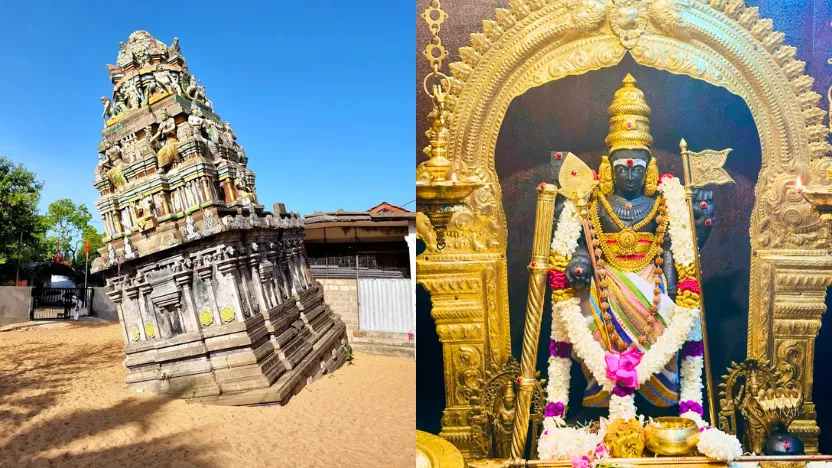
In Batticaloa, a land often celebrated for its singing fish and sweet natural beauty, stands a Murugan temple with a story that begins not with bricks or grand architecture, but with a dream. Located in Kallady, the Eelathu Thiruchendur Murugan Temple has a history shaped by faith, devotion, unexpected events and the determination of those who believed in a divine calling.
But what makes this temple particularly fascinating is how it all began, with a mysterious vision of a lone palm tree, a saffron-clad holy man and a message that would eventually lead to the establishment of a sacred place of worship. The story takes us back to 1961, on the night before Maha Shivaratri in the Tamil month of Maasi.
Swami Ongkarananda Saraswathi was asleep at the Sivananda Ashram when he experienced a vivid dream. In it, he saw a scene from the Kallady Tapovanam, where a lone palm tree stood near the seashore. Beneath its shade sat a saffron-robed holy figure.
Curious about the stranger, Swami Ongkarananda began asking him several questions. The mysterious figure responded with a gentle smile and a calm, melodious voice. Then came a statement that would change the course of the temple’s history.
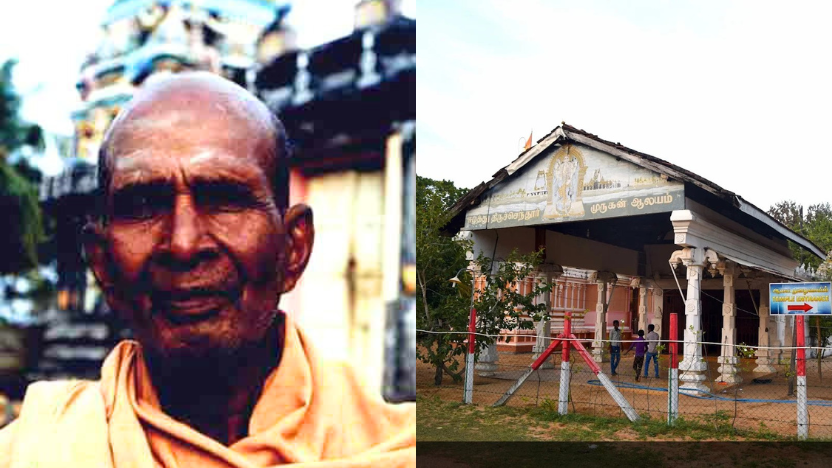
Pointing towards the sea, the figure reportedly said that he was residing at Thiruchendur, and that he regularly travelled along that route to Kataragama. During these journeys, he would stop beneath the palm tree to rest. He then made a simple request.
If Swami Ongkarananda could build even a small shelter of palm leaves at that spot, he would have a place to rest for a few days before continuing his journey. Soon after, Swami Ongkarananda awoke. He became convinced that the mysterious visitor in his dream was Lord Murugan himself.
But was this simply a dream, or was it a divine sign? For Swami Ongkarananda, the experience was powerful enough to inspire him to act. Determined to fulfil the request, Swami Ongkarananda went to the very spot he had seen in his dream. There, beneath the palm tree, he cleared away the scattered stones and used cement he had brought with him to create a small platform. He then placed a Ganesha idol that he had carved himself and consecrated it at the site.
What began as a humble act of devotion soon became a place of worship. The once-ordinary palm tree became the centre of a growing spiritual presence, attracting the attention and faith of devotees.
At this stage, there was no grand temple, elaborate entrance or towering structure. There was simply a palm tree, a small platform and the belief that something sacred had taken place there. It was a modest beginning, but one that would eventually lead to the establishment of the Eelathu Thiruchendur Murugan Temple.
About a year later, the renowned spiritual figure and poet Yogi Swami Suddhananda Bharathi visited Sri Lanka and travelled to Batticaloa at the invitation of Swami Ongkarananda and several devotees.
During his visit to the Kallady Tapovanam, a small temple made from palm leaves was established beneath the same palm tree. A Vel, the sacred spear associated with Lord Murugan, was also prepared.
Accompanied by devotional prayers and traditional musical instruments, the Vel was brought to the site. Swami Suddhananda Bharathi performed the yajna and other religious ceremonies before consecrating the Vel on the platform inside the humble shelter. From that day onwards, the place came to be known as the Eelathu Thiruchendur Murugan Temple.
According to the temple's traditional history, this took place around May 1966. It is remarkable to think that a temple which would later become an important place of devotion began with such a simple structure. Its earliest foundations were not grand buildings, but the faith and efforts of a small group of people.
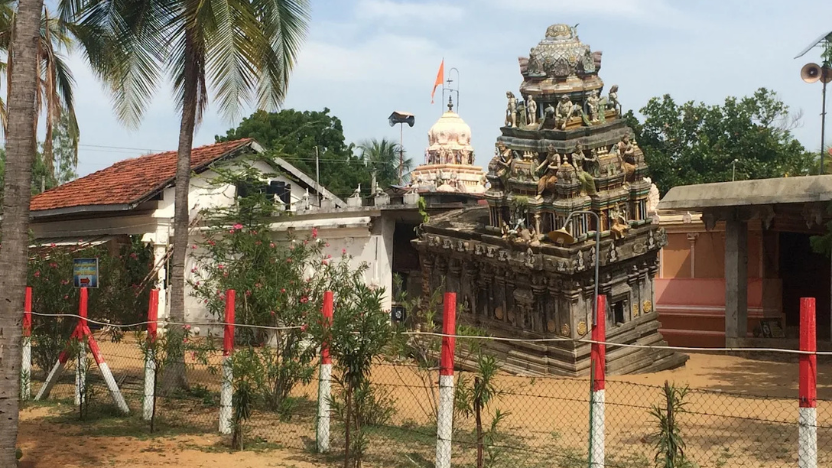
In November 1978, a powerful cyclone struck the region, causing widespread destruction. The temple was completely demolished. For a place built through years of devotion, this was a devastating setback. Yet the devotees did not abandon the site. Instead, they decided to replace the original palm-leaf shelter with a small stone structure while planning for a larger temple in the future.
On 22 October 1980, the foundation stone for the construction of a new temple was laid. By 1982, the temple had taken on a renewed appearance, marking another important chapter in its development. But one of the most intriguing events in its history was yet to come.
On 28 June 1983, an artist named Selvam was working on a painting of Lord Murugan on the temple's front façade, alongside an illustration of the temple itself. After completing much of the work, he planned to return after lunch to paint the deity's eyes, a significant final detail in the image. He left the site and went for his meal. When he returned, however, he was reportedly astonished by what he saw.
According to the temple's account, both eyes in the image of Lord Murugan appeared to have been completed, even though the artist had left before painting them. The incident became one of the temple's most memorable stories, deepening the sense of wonder surrounding the shrine.
Devotees came to regard the event as a special blessing, and the occasion became known as the “Kan Thirantha Vizha”, or Eye-Opening Festival. The festival has since been celebrated annually.
For believers, the story carries spiritual significance. For visitors discovering the temple's history for the first time, it remains one of the most curious episodes associated with the shrine. On 5 July 1984, the temple held its Maha Kumbhabhishekam, a major consecration ceremony led by Swami Ongkarananda Saraswathi, who personally conducted the religious rituals.
The temple continued to grow, supported by devotees and well-wishers. In 1986, work began on constructing a temple chariot, with the support and contributions of many people. Years of effort finally culminated in a memorable moment on 5 June 2002, when Lord Murugan was taken through the streets for the first time in a beautifully crafted chariot.
For devotees, the sight of the deity seated on the chariot and making his procession through the streets was a deeply moving occasion. However, this period also brought concern. Swami Ongkarananda's health had begun to deteriorate, and his disciples, brothers C. Sabesan and C. Niroshan, took on the responsibility of carrying out the temple's daily pujas and religious duties.
On 20 November 2004, Swami Ongkarananda Saraswathi attained Mahasamadhi, marking the end of a life closely associated with the temple's beginnings and growth. He had witnessed the transformation of a simple place beneath a palm tree into a recognised centre of Murugan worship.
The 2004 Tsunami: What survived the waves?
Just over a month after Swami Ongkarananda's passing, tragedy struck Sri Lanka. On 26 December 2004, the Indian Ocean tsunami devastated coastal communities, including parts of Batticaloa. The temple and Tapovanam suffered damage, and the surrounding compound wall was also affected.
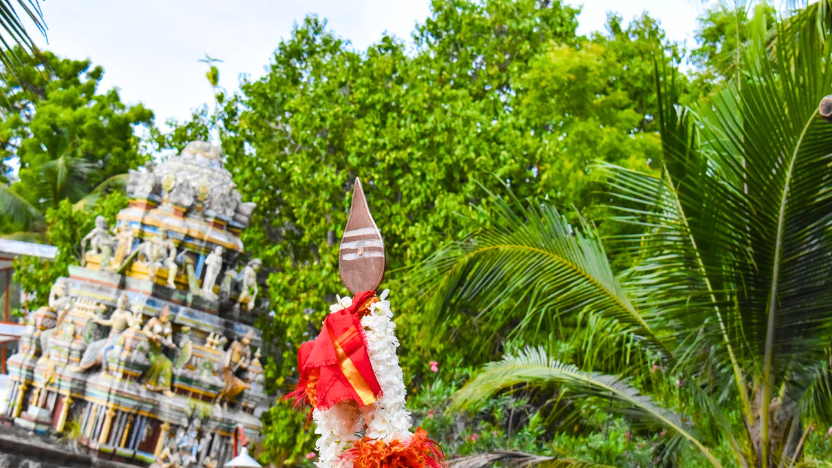
Yet, according to the temple's historical account, several important features remained remarkably untouched: the palm tree beneath which the shrine had originated, the beautifully decorated temple chariot and Swami Ongkarananda's samadhi.
The disciples who had been performing pujas inside the temple were also reported to have survived, despite struggling in seawater that reached their necks. For those who witnessed the aftermath, these events became a deeply emotional reminder of their faith in Lord Murugan.
The survival of these features took on special significance because of the temple's origins. The palm tree, which had stood at the centre of the original dream and the shrine's earliest days, remained standing even after the devastating waves.
For devotees, it was a moment of wonder and gratitude. It strengthened their belief that the sacred place held a special spiritual significance. The tsunami left the temple community with another difficult task: rebuilding.
Because the existing temple, which had faced west, had sustained damage, a decision was made to construct a new temple with an eastern entrance. The foundation for the new structure was laid, beginning another chapter in the shrine's history. On 23 June 2010, the temple held its Maha Kumbhabhishekam once again. The ceremony was followed by 47 days of Mandalabhishekam rituals.
Later, on 10 August 2010, the temple conducted its Sankabhishekam ceremony. These events marked a significant stage in the restoration of the temple and the continuation of its religious traditions. From the destruction caused by the 1978 cyclone to the devastation of the 2004 tsunami, the shrine had endured repeated challenges. Each time, devotees returned to rebuild, preserve and continue the worship that had begun decades earlier.
Today, the Eelathu Thiruchendur Murugan Temple in Kallady, Batticaloa, carries a history that stretches far beyond its physical structure. It is a story of a dream that inspired a holy man to act, a palm tree that became a place of worship, a sacred Vel that gave the shrine its identity, and a community that refused to give up even when storms and waves threatened what they had built.
Its stories from the mysterious vision in 1961 to the reported opening of Murugan's eyes in 1983 and the survival of significant features during the tsunami, continue to hold a special place in the faith and memories of devotees.
For some, the temple is a place to pray for blessings and seek strength during difficult times. For others, it is a reminder of how a small act of devotion can grow into something that touches generations. And perhaps that is what makes its history so compelling.
A dream beneath a lonely palm tree eventually became a temple. A humble shelter became a place of pilgrimage. And through destruction and rebuilding, the faith of its devotees endured. If you ever visit Batticaloa, consider making a stop at the Eelathu Thiruchendur Murugan Temple in Kallady.
Sometimes, the most extraordinary histories begin with the simplest question: What if a dream was more than just a dream?
Source / Image Credit : Newmannar , YatraDham.Org , Ealathu Thiruchenthur
You may be interested in
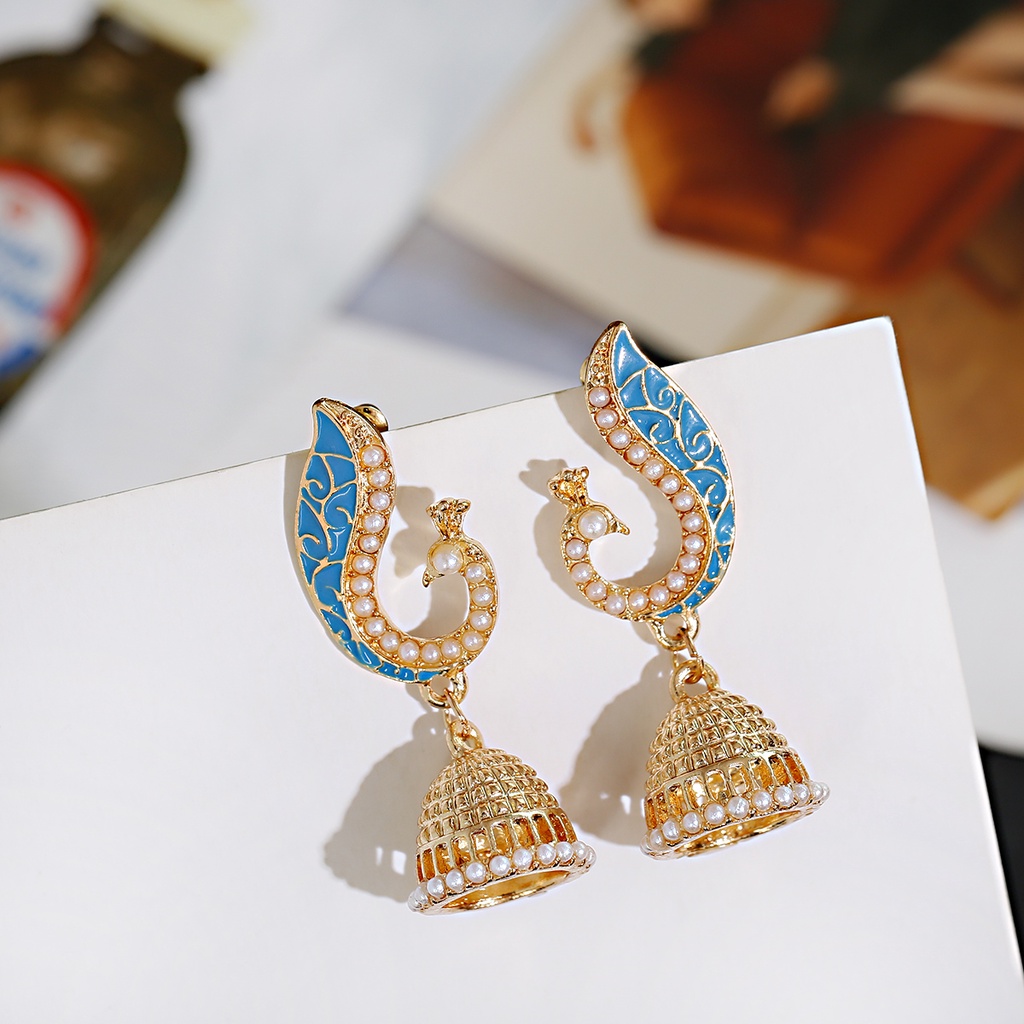
Ethnic Retro Corful Peacock Jhumka Earrings Womens Indian Jewelry Flower Gold Bell Tassel White Pearl Earrings

Royal Heritage Embroidered Anarkali Gown for Women | Premium Festive Wear by RANGOLI BAZAAR

Bollywood Style 1 Pair Of Earrings + 1 Necklace Vintage Jewelry Set Retro Design Inlaid Gemstone Match Daily Outfits Party Accessories

Ready stock lotus design indian saree