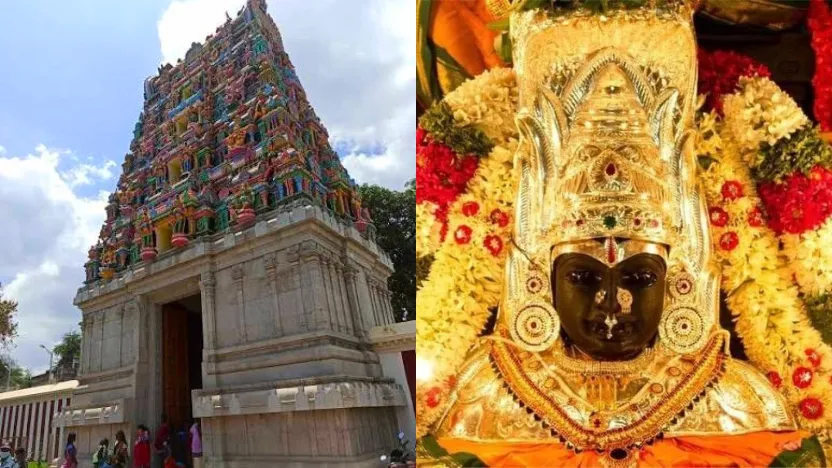
Padavedu in Tamil Nadu is not just a scenic village surrounded by the Javadi Hills, rivers and lush agricultural fields. Hidden within this peaceful landscape is a remarkable spiritual history, with more than 10 ancient temples and the revered Sri Renugambal Amman Temple at its heart. Known as one of the important Shakti Sthalams of the Thondai Mandalam region, Padavedu is also traditionally associated with the life of Parasurama, one of the ten avatars of Lord Vishnu.
The history of Padavedu dates back several centuries. Between the 13th and 14th centuries, the region was ruled by the Sambuvarayar chieftains under the patronage of the Pandyas. Padavedu is believed to have once served as the capital of their kingdom and developed into an important commercial centre, with two forts and surrounding moats. The area is also said to have been home to numerous Shiva and Vishnu temples, many of which were eventually buried or lost over time. Several of these ancient structures were unearthed and restored during the 1990s, revealing inscriptions and architectural traces connected to different periods of Tamil history.
At the centre of Padavedu’s spiritual identity stands Sri Renugambal Amman Temple, surrounded by legends that have been passed down through generations. According to temple tradition, Renuka Devi, regarded as an incarnation of Goddess Parvati, arrived in this region accompanied by her army while searching for a suitable husband. She eventually encountered Sage Jamadagni, who was performing penance here. Since Renuka Devi had camped with her army, the place came to be known as “Padai Veedu”, meaning an army encampment.
The legend takes a dramatic turn when a conflict is said to have broken out between Renuka Devi’s soldiers and the disciples of Sage Jamadagni. Goddess Durga, who accompanied Renuka Devi, is believed to have unleashed fire from her third eye. To extinguish the flames, Sage Jamadagni is said to have brought the sacred waters of the three worlds into his kamandalam and released them. The waters transformed into a powerful river, eventually known as the Kamandala Nadhi. Renuka Devi and Jamadagni later married, and their son was Parasurama, who is revered as an avatar of Lord Vishnu.
Another deeply intriguing legend surrounding Renuka Devi tells of her extraordinary purity. It is believed that she could mould fresh river sand into pots and carry water in them, using a live cobra as support. One day, however, a momentary distraction caused the sand pot to dissolve. Enraged, Sage Jamadagni ordered their son Parasurama to behead his mother.
Parasurama obeyed his father’s command, but later received a boon that allowed him to bring Renuka Devi back to life. In the haste of reuniting her, however, a mistake is said to have occurred, her head was attached to another woman’s body. This unusual legend is one of the reasons Renuka Devi came to be worshipped in a distinctive form as a powerful village goddess.
Beyond the Renugambal shrine, Padavedu is home to several other fascinating temples. Sri Yoga Ramachandra Moorthy Temple features Lord Rama in a meditative posture with Chin Mudra, while the Sri Lakshmi Narasimhar Temple is notable for Goddess Lakshmi being depicted seated on the right lap of Lord Narasimha, rather than the more commonly seen left side. The Sri Kailasa Vinayagar Temple houses a towering 5.5-foot idol of Lord Vinayagar, while the Sri Veera Anjaneyar Temple is known for its impressive eight-foot-tall Anjaneyar.
There are also temples and sacred sites connected to Subramanya Swamy, Kailasanadhar, Venugopala Swamy and the Vel consecrated by Siddhar Bogar. Some ancient shrines, including the Varadharaja Perumal and Ammayappar temples, were reportedly buried beneath layers of sand before being excavated and restored.
What makes Padavedu especially fascinating is the way its natural surroundings, forgotten ruins, ancient inscriptions, temples and legends come together in one landscape. Once a historic centre of power and commerce, it now stands as a quiet spiritual destination where centuries-old stories continue to live through the temples and the faith of devotees.
Source : Shanthiraju , the.sacredlens , justdial
You may be interested in

Ready stock lotus design indian saree

Indian Wedding Forehead Netti Pattam & Hand Wrist Pattam Gold Plated Traditional Bridal Ceremony Set
Royal Heritage Embroidered Anarkali Gown for Women | Premium Festive Wear by RANGOLI BAZAAR
Bollywood Style 1 Pair Of Earrings + 1 Necklace Vintage Jewelry Set Retro Design Inlaid Gemstone Match Daily Outfits Party Accessories