
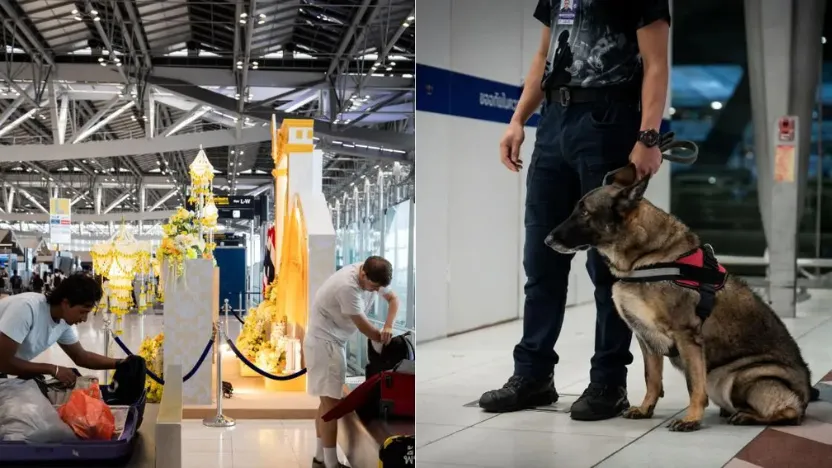
Travelling to or from Thailand soon? There’s a new airport security rule you’ll want to know about before packing your bags. From October 16, 2026, authorised airport security officers in Thailand will be allowed to open and inspect certain checked luggage even if the passenger is not present. But before you panic, this does not mean airport authorities will randomly open passengers’ bags.
The new measure applies specifically to checked baggage that has been flagged during security screening because an X-ray has detected a suspicious object, prohibited item, explosive or anything else that could potentially pose a threat to aviation safety.
The Civil Aviation Authority of Thailand (CAAT) said the measure is intended to allow security officers to deal with potential threats more quickly while preventing unnecessary delays to baggage processing and flights.
So, when can your bag be opened?
Under the new procedure, officers can inspect a checked bag without locating the passenger first, but only when there are reasonable grounds to suspect that the luggage contains a prohibited or dangerous item. The inspection must also follow strict procedures.
These include:
- The bag can only be opened when there is reasonable suspicion of a prohibited or dangerous item.
- The inspection must be carried out in a designated security area.
- The entire inspection must be video recorded.
- Records must be kept showing who conducted the inspection and what was found.
- A notice must be placed inside the luggage informing the passenger that it was opened and inspected.
If prohibited items are discovered, authorities can seize them and take further action according to Thailand’s laws and aviation security regulations.
Why is Thailand introducing this?
Previously, security personnel could have had to locate the passenger before opening suspicious checked luggage. That process could potentially delay baggage handling and, in some cases, affect flight departure times. Under the new system, authorised personnel can inspect a flagged bag immediately while following documented security procedures.
CAAT has stressed that the measure is a security procedure, rather than a policy allowing random searches of passengers’ luggage. The regulator also said similar procedures are already used in several countries, including Singapore, Japan, South Korea, the United States and parts of Europe. Comparable practices are also used at some airports in the Middle East.
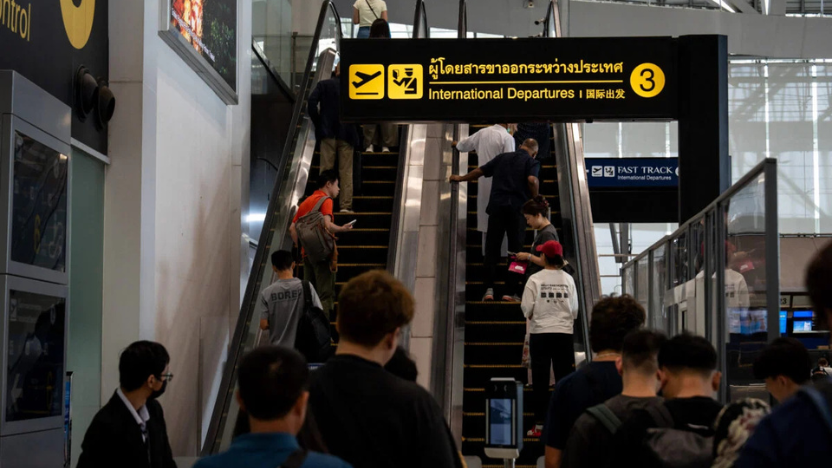
What should travellers do?
CAAT is advising passengers to check the prohibited and dangerous items lists issued by their airline and airport before packing. Travellers are also encouraged to use TSA-approved locks for checked luggage. These locks can be opened by authorised security personnel using specialised tools if an inspection is required. It is also a good idea to avoid placing valuables, important documents, fragile belongings or essential personal items in checked baggage.
And remember, your luggage may also be subject to security inspections during transit or when you arrive at your destination.
What if your luggage is damaged?
If you believe your luggage was damaged during an authorised security inspection, you can lodge a complaint through your airline or CAAT's complaints channel for review.
The new notification was first published in February 2026, giving airports, airlines and other relevant agencies several months to prepare before the procedure officially comes into effect on October 16.
Source / Image Credit : CAAT - The Civil Aviation Authority of Thailand , SAYS , Matt Hunt/NurPhoto/AFP
You may be interested in

Royal Heritage Embroidered Anarkali Gown for Women | Premium Festive Wear by RANGOLI BAZAAR

Ready stock lotus design indian saree

Indian Wedding Forehead Netti Pattam & Hand Wrist Pattam Gold Plated Traditional Bridal Ceremony Set

Bollywood Style 1 Pair Of Earrings + 1 Necklace Vintage Jewelry Set Retro Design Inlaid Gemstone Match Daily Outfits Party Accessories