


“Helping families say goodbye peacefully is one of the most meaningful things I can do.”
In a profession many would hesitate to enter, Renugha M Vadivelu has found not only purpose but a deep sense of compassion and service. A celebrity cosmetologist with professional training in aesthetics and embalming, Renugha has dedicated part of her career to restoring dignity and peace to those who have passed on, helping grieving families say their final goodbyes with comfort.
Her journey into this unusual field did not begin in funeral services. Renugha first built her career as a professional makeup artist, working with clients to enhance their appearance and confidence. She was also involved in special effects (SFX) makeup for film and television productions, particularly in Singapore dramas. Through these experiences, she developed strong technical skills in facial work and advanced makeup techniques.
Over time, however, Renugha began reflecting on how those skills could serve a deeper purpose.
“I started thinking about how my knowledge could be used in a more meaningful way,” she shares. “That was when I became interested in the funeral service industry. I realised that makeup can also play a very important role in helping families say goodbye peacefully to their loved ones.”
That realisation led her to study post-mortem makeup and eventually obtain her embalming licence. Today, Renugha continues to work both as a professional makeup artist and as an embalming mortician, two paths she balances as part of her freelance career, both of which she deeply loves.
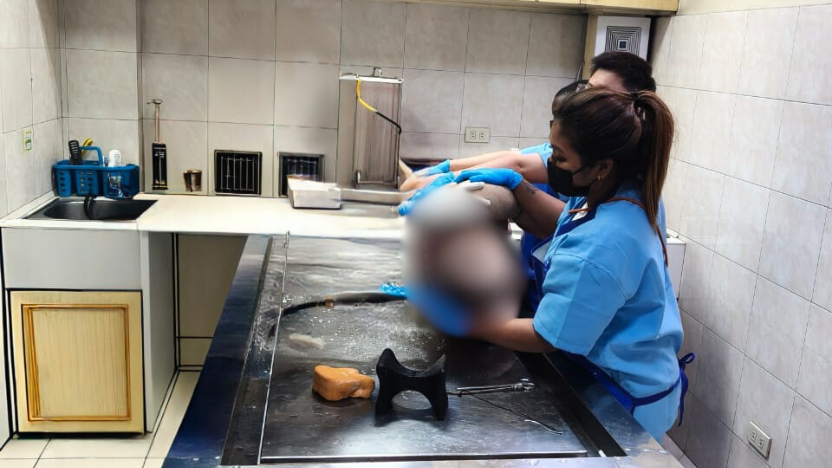
For Renugha, the work is driven by compassion.
“When families lose someone, they love, they go through an incredibly difficult emotional time. Being able to prepare their loved one with dignity and care gives them comfort during their final farewell,” she says. “Knowing that my work can bring even a small sense of peace to grieving families is what inspires me.”
Her motivation is also deeply personal. Renugha lost her father at a young age, a loss that shaped her understanding of grief and remembrance.
“That experience stayed with me throughout my life. It made me realise how important it is for families to remember their loved ones peacefully,” she explains. “Through my work, I hope families can hold on to a calm and beautiful memory of the person they loved.”
In the funeral profession, the role of a makeup artist goes far beyond appearance. It is about restoring a natural and peaceful look to the departed, preserving dignity during the final viewing.
“It is not about beauty in the usual sense,” she says. “It is about allowing families to remember their loved one in a calm and respectful way. The way they see the person for the last time can stay in their hearts forever.”
Every preparation begins with a moment of reflection.
“The first thing in my mind is respect,” Renugha says. “I remind myself that this person was someone’s parent, child, spouse or friend. I approach the process with the same dignity I would give my own family.”
The process often involves carefully studying photographs of the individual taken while they were alive. Using gentle makeup techniques, proper lighting and sometimes restorative work, Renugha works to recreate a natural and familiar appearance.
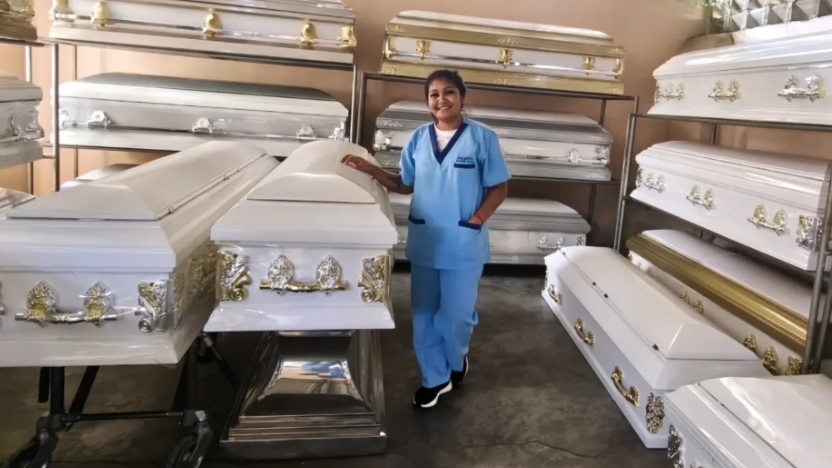
In many cases, families have specific requests. For example, if someone lost their hair due to illness such as cancer, the family may ask for a wig, so their loved one looks the way they remember.
“Every detail matters to the family during their final farewell,” she explains. “Respecting those wishes is very important.”
While the profession can be emotionally challenging, Renugha remains focused on the purpose behind her work.
“It can be sad, especially when you see the pain of the family. But in this profession, we must remain strong and professional so we can do our job properly,” she says. “Our role is to support the family during one of the hardest moments of their lives.”
There have also been many moments of gratitude that have stayed with her.
“When families express their thanks after seeing their loved one prepared peacefully, those moments are very meaningful,” she says. “You can see how much it comforts them.”
The work itself requires a unique combination of skills. Beyond makeup artistry, professionals in this field must understand facial structure, skin tones and restorative techniques. Scientific knowledge is also essential.
“We need to understand human anatomy and the different conditions or illnesses a person may have had,” Renugha explains. “This helps us handle the preparation safely while maintaining proper hygiene and professional standards.”
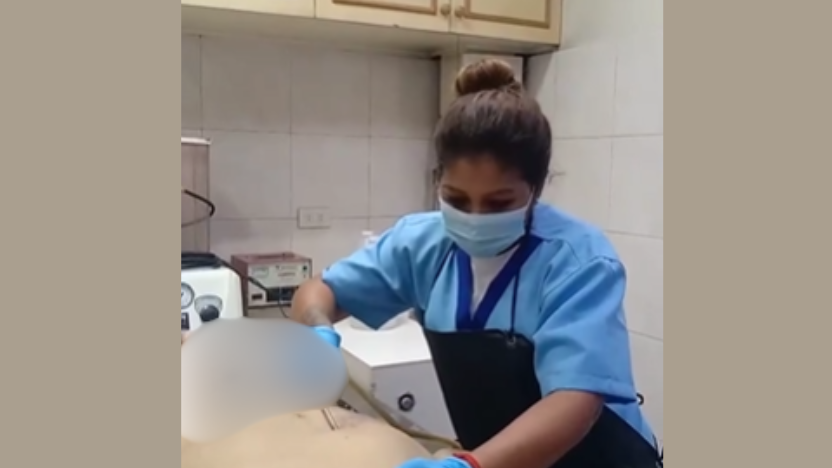
The preparation time can vary depending on the situation. On average, the process may take between one and three hours, though embalming itself can take several hours. More complex cases requiring additional restorative work may take longer.
Cultural understanding also plays a significant role in her profession. Different religions and communities follow specific traditions and rituals during funerals, and respecting those practices is essential.
Renugha, who comes from a Hindu background, notes that embalming is not traditionally common in Hindu funeral practices. However, much of her professional experience has involved working with Chinese and Christian communities, where embalming and detailed preparation rituals are often practiced.
Interestingly, her multicultural upbringing has helped her navigate these traditions with sensitivity.
“My mother is Peranakan Chinese, so growing up with exposure to both cultures helped me understand different traditions and beliefs,” she explains. “That has been very helpful in my profession.”
For families, the final viewing often plays an important role in the grieving process.
“Seeing their loved one looking calm and dignified can bring emotional comfort and closure,” Renugha says.
She compares the emotional importance of the moment to another milestone she knows well as a makeup artist.
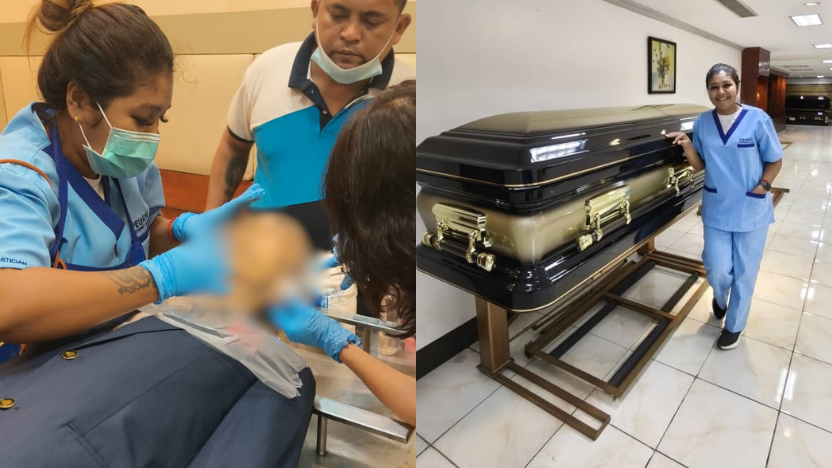
“Just like how we prepare a bride for one of the most important days of her life, I believe a person’s final farewell should also be handled with care and dignity. Their first and last moments deserve the same respect.”
Working closely with life and death every day has also changed her perspective on life.
“It constantly reminds me that life is precious and unpredictable,” she says. “It teaches me to value time, relationships and to live with gratitude.”
Despite the meaningful nature of her work, Renugha acknowledges that many people still see the profession as unusual or even frightening.
“In my own community, especially among Indians, some people still see it as a taboo,” she says. “Some even wonder how I can do post-mortem work and still work as a makeup artist for living clients.”
But she believes education and awareness can slowly change these perceptions. This profession is built on care, respect and service. With the goal is to help families honour their loved ones with dignity, at its core, Renugha believes the work is about humanity.
“Behind every preparation is a grieving family and a person who deserves respect,” she reflects. “Sometimes the way we prepare them becomes the family’s last memory.”
For her, that responsibility is sacred.
“They were once living individuals with families, memories and people who loved them,” she says. “We should treat them with the utmost sincerity and respect until the very end.”
This is an exclusive story by Astro Ulagam. Any reproduction or adaptation requires prior consent from the interviewee to ensure accuracy. If referencing this article, please provide proper credit to Astro Ulagam along with a backlink in recognition of our editorial efforts.