

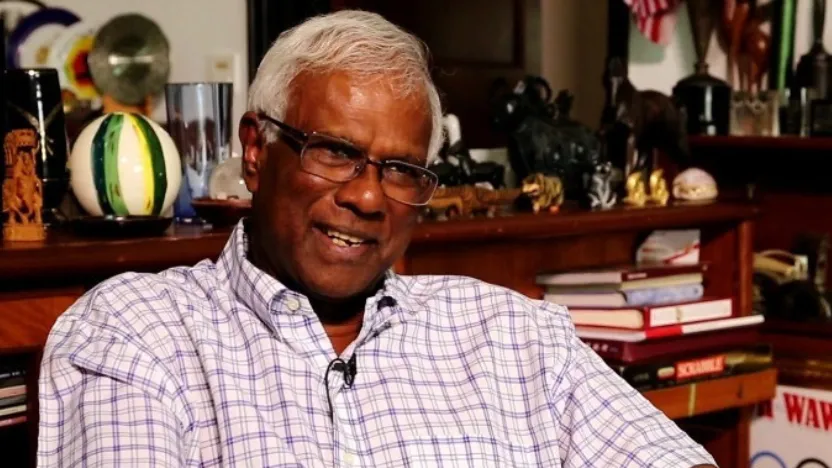
Long before he became one of Malaysia’s most respected medical figures, Tan Sri Dr Mani Jegathesan was a young boy with extraordinary speed and an even greater dream.
Fondly remembered as the ‘Flying Doctor’, Dr Mani Jegathesan carved his name into Malaysia’s sporting history during the golden era of athletics in the 1960s. Known as the fastest man in Asia during his prime, he was not only an accomplished sprinter but also a distinguished doctor, researcher and sports administrator whose influence extended far beyond the running track.
His remarkable story is one of talent, resilience and unexpected turns that would shape the course of his life. Life has a way of unfolding in unexpected directions, and for Manikavasagam Jegathesan, the Olympic Games became the defining thread that connected his passions and purpose.
At just 16 years old, Dr Mani stepped onto one of the world’s biggest sporting stages, the 1960 Rome Olympics. Still a schoolboy, he found himself surrounded by athletes he admired and global sporting icons who would inspire his future.
Recalling his experience years later, Dr Mani shared how impressionable he was during those early days.
“When the Rome Olympics started, every winner became my hero,” he said.
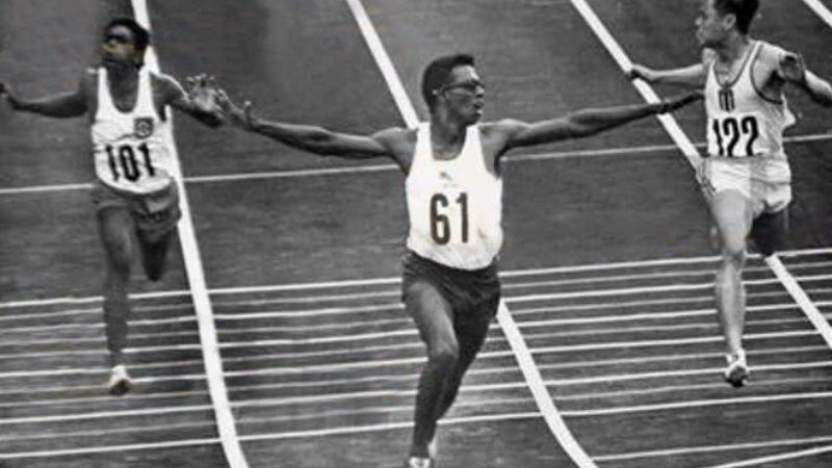
Among those heroes was Italian sprinter Livio Berruti, the 200-metre champion known for racing in dark sunglasses. Inspired by him, Dr Mani adopted the same signature style and never competed without dark glasses again.
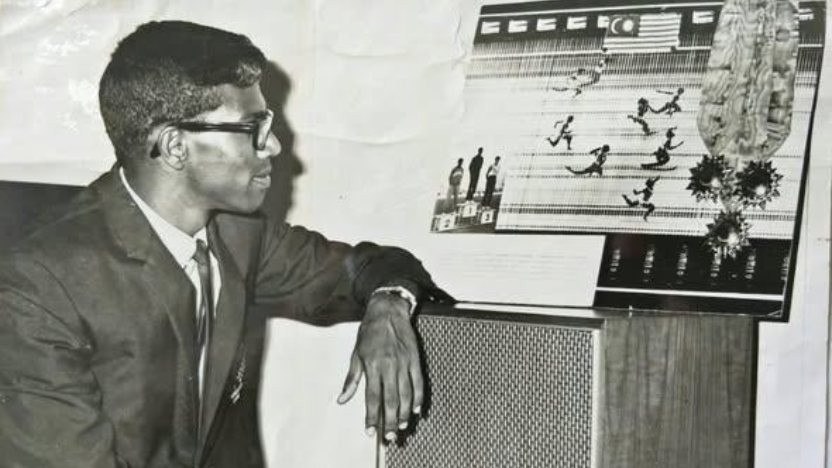
Another unforgettable moment came when he raced against Indian sprint legend Milkha Singh, famously known as the ‘Flying Sikh’. Although Dr Mani did not advance beyond the first heat in Rome, the experience ignited something powerful within him.
Four years later, the young athlete returned to the Olympics as a transformed competitor.
By the time the 1964 Tokyo Olympics arrived, Dr Mani had become the fastest man in Asia and an Asian Games champion in both the 100m and 200m events. Expectations were high.
Months before Tokyo, he clocked an impressive 20.5 seconds in Singapore for the 200 metres, sparking hopes that he could challenge the world’s best and perhaps even reach an Olympic final.
Dr Mani first competed in the 100 metres, successfully making it beyond the opening round with a time of 10.6 seconds becoming among the few Malaysians at the time to achieve such a feat. Yet it was the 200 metres where hopes truly soared.
The Tokyo Olympics placed Dr Mani shoulder-to-shoulder with some of the biggest names in world athletics.
In the opening round of the 200 metres, he raced against Canadian sprint superstar Harry Jerome, who had already claimed bronze in the 100m final. The quarter-finals proved even more historic.
There, Dr Mani competed against American sprinter Paul Drayton and his childhood hero Livio Berruti. Finishing just behind the pair, he secured qualification for the semi-finals and became the first Malaysian athlete to reach that stage in the Olympic 200 metres.
It was a historic breakthrough. But destiny had another plan. What should have been a night of preparation turned into one of uncertainty.
Dr Mani awoke in the middle of the night with fever, body aches and a painfully sore throat. Unable to sleep and growing increasingly anxious, he realised something was wrong.
Despite feeling unwell, he pushed himself onto the track the next day. He ran with determination but finished last in his semi-final heat. Though disappointed, he continued competing as part of Malaysia’s relay squad before eventually withdrawing from the 4x400m relay.
Only afterwards did the truth emerge. At the Olympic Village infirmary, Japanese physician Dr Yoshio Kuroda diagnosed him with chicken pox, a highly contagious illness that immediately ruled him out of further participation, including the closing ceremony.
For many athletes, such a setback could have marked the end of a dream. For Dr Mani, it became the beginning of something greater.
Dr Mani continued competing and later represented Malaysia again at the 1968 Mexico Olympics, where he once more reached the 200m semi-finals and set a Malaysian record of 20.92 seconds, a mark that still stands today.
But his journey was evolving. After athletics, he devoted himself fully to medicine and public service, eventually becoming a respected medical officer and researcher.
Then, decades after Tokyo, fate brought an extraordinary reunion. In 2003, while serving at international athletics meet in Hyderabad, India, a familiar face walked into the medical station. It was Dr Yoshio Kuroda, the same physician who had diagnosed his chicken pox during the Tokyo Olympics.
“You’re the guy with chicken pox!” Dr Kuroda reportedly exclaimed upon seeing him.
What began as an unexpected reunion soon became a professional partnership. Recognising Dr Mani’s expertise and dedication, Dr Kuroda later recommended him to join the Medical Committee of the Olympic Council of Asia. When Dr Kuroda retired after decades of service, he nominated none other than Dr Mani as his successor.
Today, Tan Sri Dr Mani Jegathesan’s legacy extends far beyond medals and records. As chairman of the Medical Committee of the Olympic Council of Asia, he has championed sports medicine and anti-doping efforts while continuing to inspire generations of Malaysians.
His life story is a powerful reminder that success is not always measured by podium finishes alone. The illness that once robbed him of Olympic glory unexpectedly opened doors to lifelong service, leadership and international recognition.
The young sprinter who once dreamed of running like his heroes eventually became one himself. And perhaps that is the greatest victory of all.
Source / Image Credit : The Star , theolympians.co , Jeya NT Nandagopan