The month of Aadi is one of the most sacred periods in the Hindu calendar, especially for devotees of Goddess Amman. Throughout this month, Tuesdays and Fridays are considered highly auspicious, with thousands of devotees visiting temples, offering prayers and lighting Maa Vilakku to seek the Goddess' blessings.
Apart from worshipping Amman, elders also encourage devotees to remember and pray to their Kuladeivam (family deity) during Aadi. It is believed that worshipping both Amman and the family deity strengthens the family's spiritual protection, removes obstacles and brings harmony into the home.
Among the many rituals observed during this month, lighting the Maa Vilakku remains one of the most meaningful traditions passed down through generations.
What is Maa Vilakku?
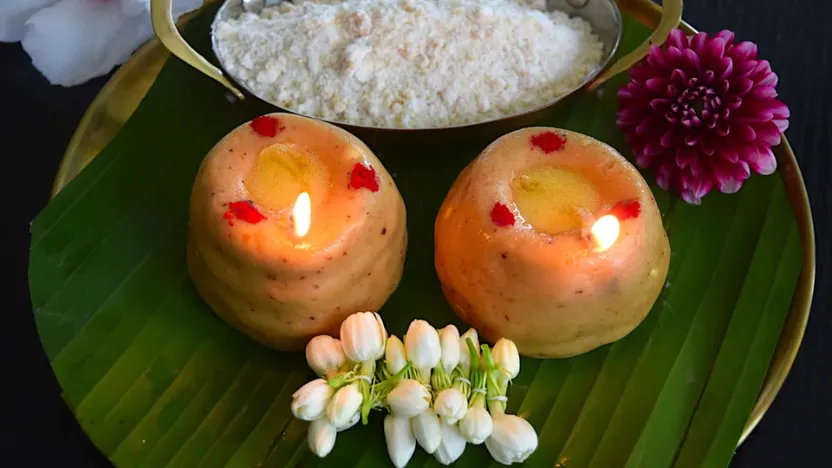
Maa Vilakku is a traditional lamp made from rice flour, jaggery and ghee. Unlike an ordinary oil lamp, this sacred offering symbolises gratitude, devotion and the presence of the Divine Mother within the home.
The rice flour represents nourishment and life, jaggery symbolises sweetness and happiness, while the ghee represents Agni (the sacred fire), which carries our prayers to the Divine. When the lamp is lit, devotees believe that Amman herself blesses the home with peace, protection and prosperity.
How to prepare Maa Vilakku?
Ingredients
- 1 cup rice flour
- ½ to ¾ cup grated or powdered jaggery
- 1–2 tablespoons ghee (plus extra for lighting)
- Cotton wick
- A pinch of cardamom powder (optional)
- Turmeric and kumkumam
Step 1: Prepare the dough
In a bowl, combine the rice flour and powdered jaggery. If desired, add a pinch of cardamom powder for a pleasant fragrance.
Next, add one or two tablespoons of soft ghee and knead everything together using your hands until it forms a firm, smooth dough.
Avoid adding water, as the dough should be firm enough to hold the shape of the lamp.
Step 2: Shape the lamp
Roll the dough into a ball and place it on a banana leaf or a clean plate. Using your thumb, gently press the centre to create a deep hollow where the ghee will be poured. Smooth out any cracks around the edges using your fingers.
Step 3: Decorate the Maa Vilakku
Apply small dots of turmeric and kumkumam around the lamp as a mark of auspiciousness.
Step 4: Light the lamp
Place a cotton wick in the hollow, pour enough ghee to soak the wick, and light it while chanting Amman's name or offering your prayers. Many devotees also offer flowers, fruits, coconut and betel leaves before completing the poojai.
When should Maa Vilakku be lit?
The most auspicious days are the Fridays and Tuesdays of the Aadi month. Many families also light Maa Vilakku before important occasions such as:
- Marriage ceremonies
- Housewarming (Graha Pravesham)
- Seemantham (baby shower)
- Family celebrations
- Annual Kuladeivam worship
Some families also prepare Maa Vilakku once every year as an offering of gratitude to their family deity. For generations, devotees have believed that lighting Maa Vilakku with sincere devotion brings blessings into their lives.
Among the commonly believed spiritual benefits are:
- Invites the blessings of Goddess Amman and the family deity.
- Brings peace, happiness and unity within the family.
- Removes obstacles and negative energies.
- Protects the household from difficulties.
- Brings success in career, education and business.
- Creates positive energy within the home.
- Blesses couples with auspicious beginnings before important family events.
- Improves health, longevity and overall well-being.
- Helps devotees experience inner peace and mental clarity.
Why is Maa Vilakku so special during Aadi?
The month of Aadi is traditionally associated with the Divine Feminine. Devotees believe that during this sacred period, the blessings of Amman are especially powerful.
Lighting Maa Vilakku is not only a ritual, it is an act of surrender and gratitude. As the flame burns, devotees offer not only the lamp but also their worries, prayers and hopes at the feet of the Goddess.
Source : Kalki Online , Reshkitchen , Dheivegam , Gomathi Recipes
You may be interested in
Ready stock lotus design indian saree
Indian Wedding Forehead Netti Pattam & Hand Wrist Pattam Gold Plated Traditional Bridal Ceremony Set
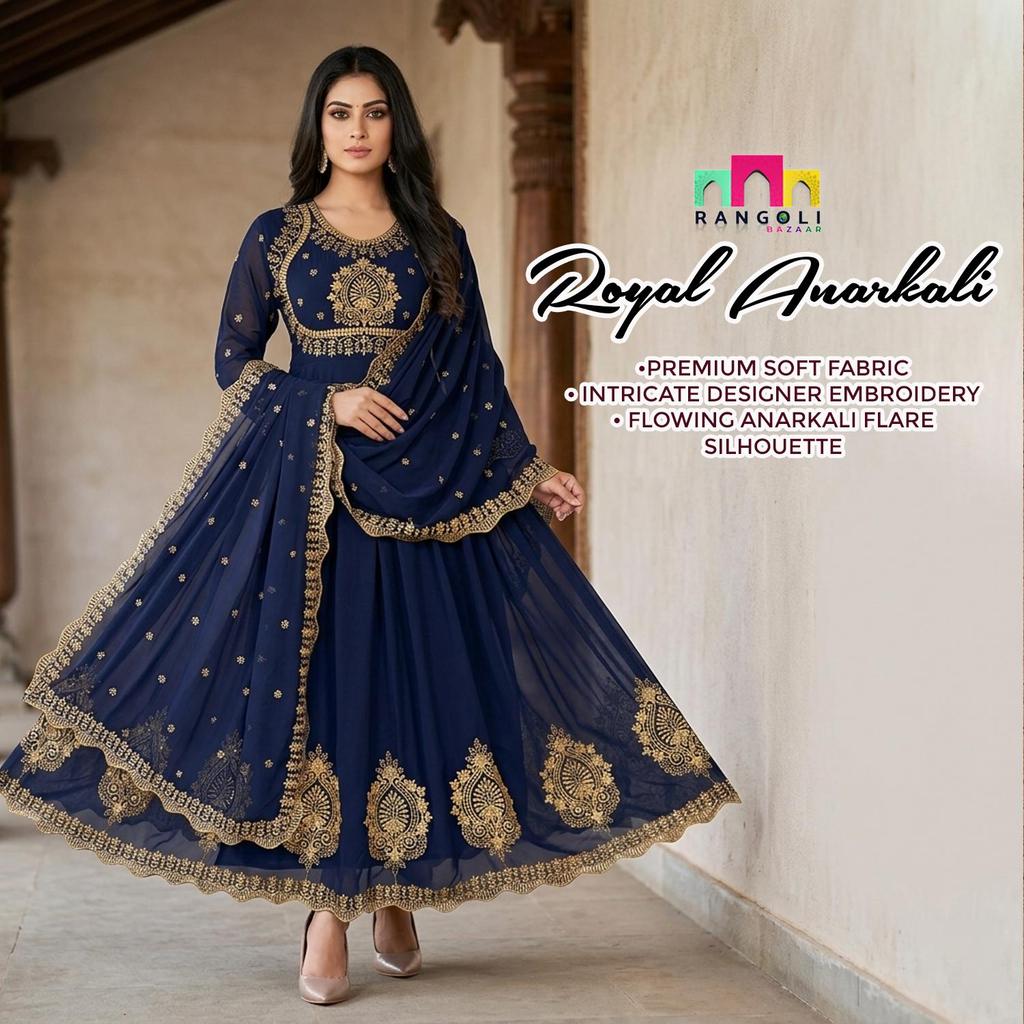
Royal Heritage Embroidered Anarkali Gown for Women | Premium Festive Wear by RANGOLI BAZAAR
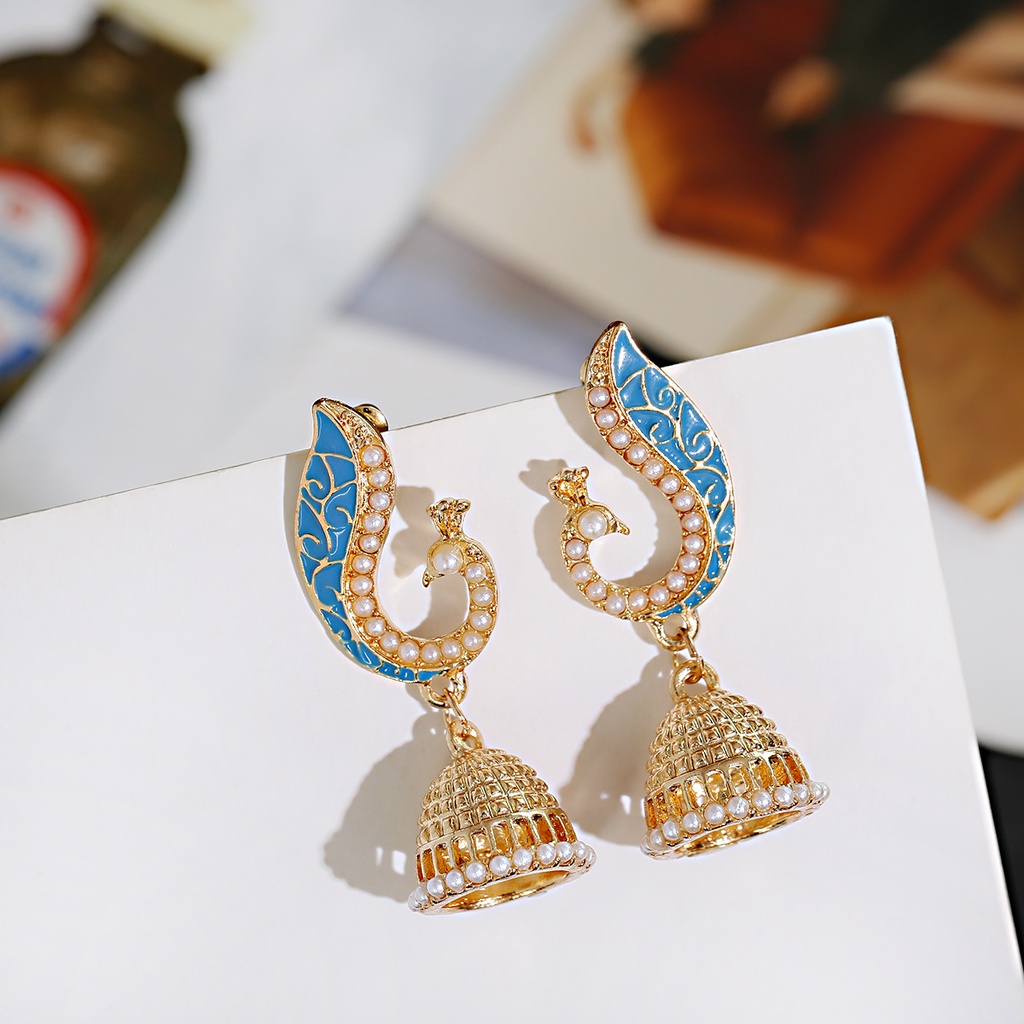
Ethnic Retro Corful Peacock Jhumka Earrings Womens Indian Jewelry Flower Gold Bell Tassel White Pearl Earrings