

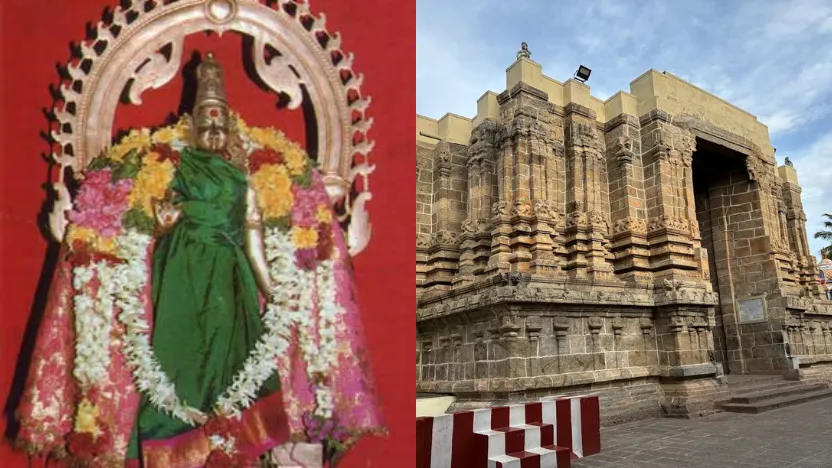
At the sacred foothills of Palani, where thousands climb each day to seek the blessings of Lord Murugan, there is a temple that quietly tells a story of love not of grandeur, but of a mother who could not stay away from her child.
The Sri Periyanayagi Amman Temple is more than just a place of worship. It is a story carved in stone, echoing a mother’s longing.
Legend says that when Lord Murugan chose to reside atop the hill as Dhandayuthapani Swamy, his mother, Goddess Parvati, could not bear the separation. Unable to remain far from her son, she descended to the foothills and chose to stay there as Periyanayagi watching over him, close enough to feel his presence, yet allowing him his divine path.
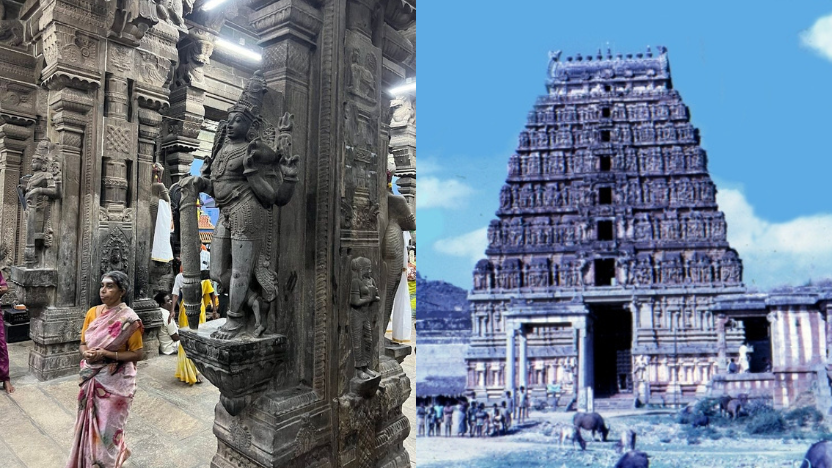
Over time, what began as a simple shrine grew into a magnificent temple, built during the Nayak period nearly 400 years ago. Local chieftains from surrounding regions added to its structure, each layer of stone carrying stories of devotion, patronage, and time itself. Yet beneath these additions, whispers remain of an even older past, one that traces back to the Pandya era, now hidden within the temple’s walls.
Though many come here to worship the Goddess, the temple holds a quiet truth at its heart, it still belongs to Murugan. Out of all, he stands, flanked by his parents, Kailasanathar and Periyanayagi Amman, forming the sacred Somaskanda presence. It is as though the divine family, once separated, has found a way to remain together again.
Step inside, and the temple begins to speak in another language that of art. Pillars rise like storytellers, each one intricately carved with figures, patterns, and celestial symbols. In the Navaranga Mandapam, the craftsmanship reaches a breathtaking peak, where every inch reflects the devotion of the artisans, including the contributions of the Nadar community who helped shape its beauty.
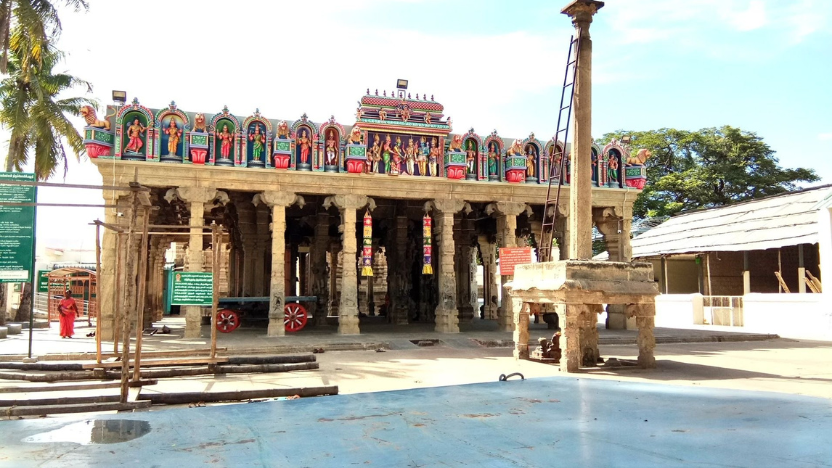
If one pauses long enough, the temple reveals its quieter wonders, a mirror in the Amman shrine reflecting sacred spaces unseen at first glance, stone carvings of Gnana Dandayudhapani brought to life with astonishing detail, and rows of pillars representing the zodiac and stars, as if the cosmos itself has found a place within these walls.
Festivals breathe life into the temple’s story. During Vijayadasami, the Vel of Murugan is brought down from the hill, symbolising the victory of good over evil, a powerful moment that connects the hill temple and the town below. In the month of Aadi, chants fill the air as Laksha Archana rituals draw devotees in large numbers, each prayer adding to the temple’s living legacy.
There are stories even in its inscriptions one from centuries ago speaks of land donated during a solar eclipse, a moment considered sacred, reminding us of that faith here has always been intertwined with time, nature, and belief.
Today, while many rush past on their journey up the hill, this temple remains watchful and filled with meaning. It stands not just as a monument of architecture, but as a reminder of something deeply human within the divine.
A mother who chose not distance, but closeness. A love that did not fade, even in separation. And a temple that continues to hold that story, quietly, for those who are willing to pause and feel it.
Source / Image Credit : Arulmigu Dandāyudha , wanderlog