


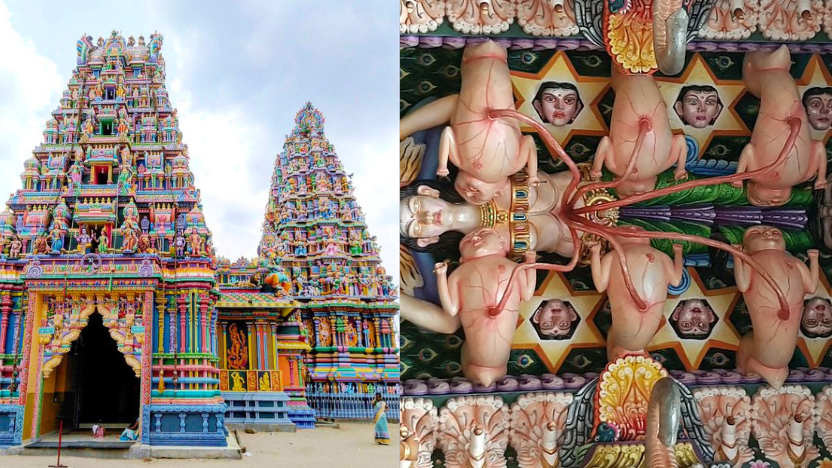
Just two kilometres from Trincomalee Railway Station stands a temple that quietly carries nearly a thousand years of history, the Shri PathiraKaali Amman Temple. At first glance, its towering, vividly coloured gopuram draws the eye. But beyond its striking exterior lies a story deeply woven into the spiritual and political history of the region.
Dedicated to Goddess Bhadrakali, a fierce yet protective manifestation of Kali Amman, the temple forms part of the ancient Koneswaram Temple complex. Its origins date back to the 11th century, during the height of the Chola Empire’s influence across South India and Sri Lanka. Historical records indicate that the shrine was expanded under King Rajendra Chola I, one of the most formidable rulers of the dynasty. An inscription within the temple premises continues to bear testimony to his patronage, offering a tangible link to a powerful medieval past.
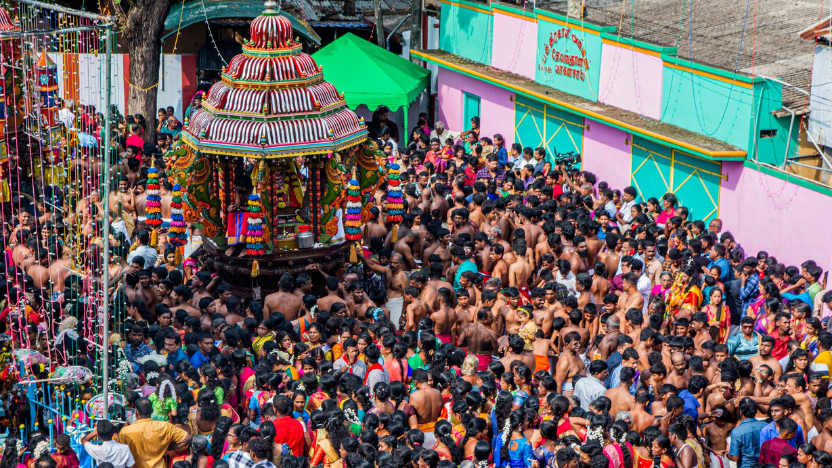
The temple’s presence near Swami Rock, close to the historic Koneswaram Temple, further deepens its historical resonance. For centuries, these sacred spaces have shared ritual ties, especially during grand annual celebrations. The Mahotsavam festival, typically observed in March, lasts about ten days and culminates in a majestic chariot procession and the traditional water-cutting ceremony at the Back Bay Sea, a ritual that has drawn generations of devotees to Trincomalee’s shores.
Interestingly, the temple’s legacy even extends into literature. It is mentioned in Wilbur Smith’s 1997 novel Birds of Prey, set in the 1660s, suggesting that the shrine had already established its significance centuries earlier.
Source / Image Credit : trawell.in , devimahatmya , Tamil Guardian , Pinterest, Tripadvisor , Re-Heritage