
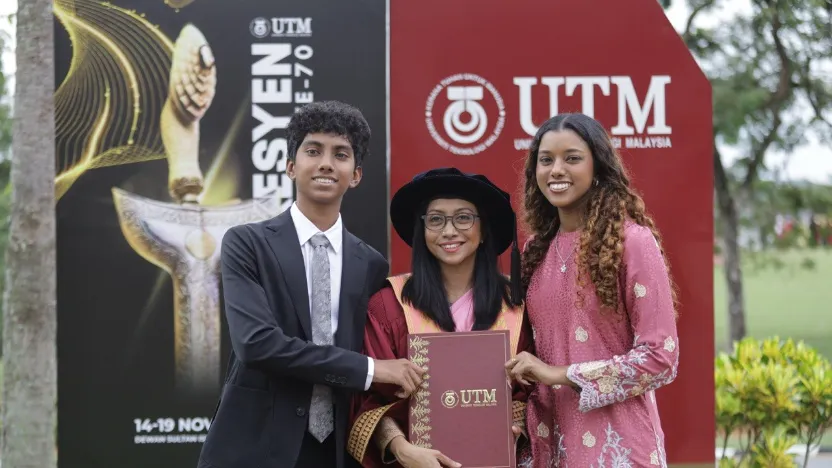
For years, Dr Surita Mogan lived with pain that many struggled to understand. She was told that her menstrual cramps were normal, that she was exaggerating and that she simply had to learn to live with them.
But rather than allowing those difficult experiences to define her, she turned them into a purpose that would eventually reach far beyond her own struggles. Today, the 51-year-old is not only a PhD graduate of Universiti Teknologi Malaysia (UTM), but also an advocate for women living with endometriosis, a researcher and an international contributor to the World Health Organization's (WHO) work on developing global guidelines for endometriosis care.
As she celebrates her academic achievement at UTM's 70th Convocation, her journey serves as a reminder that personal struggles can sometimes become the starting point for meaningful change.
“A health condition may become part of your story, but it does not have to become the limit of your story,” said Dr Surita.
Born in Batu Pahat, Johor, and now based in Kuala Lumpur, Surita's academic journey initially took a different direction. She graduated with a degree in Teaching English as a Second Language (TESL), followed by a Master's degree in Education Administration from Universiti Putra Malaysia (UPM).
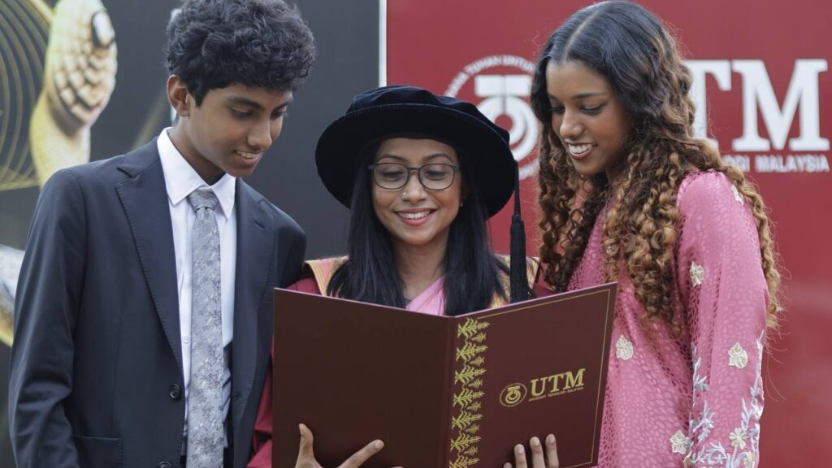
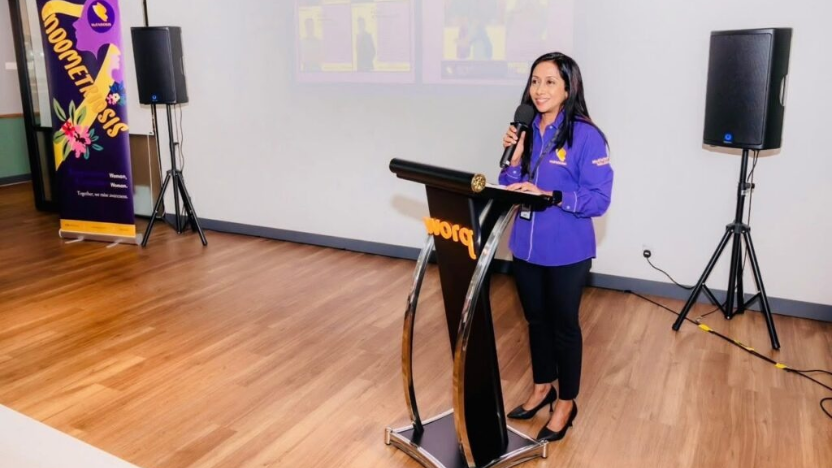
Before pursuing her doctorate, she spent 20 years as a senior lecturer at a private university in Selangor. She is also a mother of two and the Founder and President of the Endometriosis Association of Malaysia (MyEndosis).
However, her decision to venture into health communication research was deeply influenced by her own experience with endometriosis.
Surita was diagnosed with endometriosis in 2001, nine years after her symptoms first began. Looking back, she recalled how her menstrual pain was repeatedly dismissed, with some telling her that it was normal, that she was exaggerating and that she simply needed to endure it. Receiving a diagnosis finally gave her an explanation for the prolonged suffering she had experienced. However, the journey did not become easier overnight.
Repeated surgeries and fertility-related challenges made her increasingly aware of the physical and emotional difficulties faced by women living with the condition. More importantly, she began recognising that many women were struggling with something beyond the illness itself: getting others to understand their pain and having their symptoms taken seriously by healthcare professionals.
In 2013, Surita became Malaysia's country captain for the global endometriosis awareness movement organised by World Endomarch Inc. Through this involvement, she connected with patients and caregivers whose experiences reflected many of the challenges she had personally encountered.
Realising the need for a dedicated support platform in Malaysia, she worked alongside fellow patients and caregivers to establish MyEndosis, which was formally registered as a non-governmental organisation in 2014.
Since then, the association has focused on raising public awareness, supporting patients and strengthening collaboration with hospitals, healthcare professionals, universities, other NGOs and government-related agencies. For Surita, one of the most meaningful parts of this journey has been seeing women realise that debilitating menstrual pain should not simply be accepted as normal.
She wanted women to understand that their pain deserved attention, proper assessment and appropriate medical support. As her advocacy work grew, Surita realised that raising awareness alone was not enough. She wanted to understand why communication between patients and healthcare professionals sometimes failed, particularly when women attempted to explain the severity of their endometriosis-related pain.
That question eventually brought her to UTM. In October 2020, she enrolled as a PhD candidate under the Faculty of Social Sciences and Humanities, Language Academy, specialising in health communication.
Her research explored the communication challenges surrounding endometriosis pain, particularly how patients describe their symptoms, how healthcare professionals interpret those descriptions and what could be done to improve pain assessment during clinical consultations.
She recognised that pain is a deeply personal experience. Even when patients experience similar symptoms, they may describe them differently depending on their language, culture, previous experiences and individual perceptions.
When these differences are not properly understood, patients may feel dismissed or misunderstood, while healthcare professionals may struggle to assess the severity of the symptoms being reported.
Her research eventually led to the development of a communication guideline for endometriosis pain assessment, with the aim of improving interactions between patients and healthcare professionals.
The achievement was particularly meaningful because it allowed her to transform years of personal experience and advocacy into research that could potentially benefit other women. Pursuing a doctorate while maintaining her professional responsibilities, leading MyEndosis and raising two children was far from easy.
There were moments of exhaustion, uncertainty and self-doubt, particularly as she moved between the emotionally demanding responsibilities of patient advocacy and the rigorous expectations of academic research. Nevertheless, she remained committed to completing what she had started.
Her children became an important source of motivation, as she wanted them to understand that age, health challenges and difficult life experiences should not prevent someone from continuing to learn or pursuing meaningful ambitions.
She also credits her supervisor, Associate Professor Dr Aireen Ibrahim, for constantly challenging her to strengthen her arguments, question assumptions and approach her research with greater academic discipline.
Her co-supervisor, Dr Nur Ain Balqis Haladin, and the wider UTM academic community also played important roles throughout her academic journey.
Her dedication was reflected in her academic achievements, including receiving a Silver Medal at the Graduate Research Exhibition (GrEx) in 2021 for her e-poster titled “Patient and Healthcare Providers’ Views on the Communication Challenges of Offering Healthcare to Endometriosis Patients”.
However, the development of her communication guideline remains one of the most significant outcomes of her research. While her work began with a desire to help women in Malaysia, Surita's advocacy has gradually expanded onto the international stage.
In 2024, she was selected to serve on the Steering Committee of the World Endometriosis Organisation (WEO), connecting her work with the wider international endometriosis community. Then, in 2026, she reached another significant milestone when she was selected as an Expert Contributor to the WHO's work towards developing global guidelines for endometriosis care.
Since July 2026, she has been involved in the process and is scheduled to attend a Guideline Development Group meeting in Geneva, Switzerland, from December 1 to 3.
For someone who once struggled to have her own pain recognised, the opportunity carries a deeply personal meaning. It gives her a platform to contribute to international discussions on improving endometriosis care while bringing patient perspectives into the development of global healthcare guidance.
She also hopes to ensure that experiences from Malaysia and the wider Asian region are represented in these discussions. For Surita, this is not simply about receiving international recognition. It is about taking the voices of women who have spent years struggling to be heard into conversations where their experiences can help shape better healthcare approaches.
Looking ahead, Surita hopes to strengthen the connection between academic research, patient advocacy and everyday healthcare practice. One of her priorities is to encourage the use of her research findings in communication training for doctors, nurses and other healthcare professionals, particularly in Malaysia.
She hopes that better communication will help women feel heard, enable healthcare providers to understand their symptoms more clearly and encourage more patient-centred approaches to endometriosis management.
Reflecting on her time at UTM, she said the university had transformed the way she approached knowledge and advocacy, giving her stronger research skills, greater intellectual confidence and a deeper appreciation for evidence-based work.
She also expressed gratitude to her supervisors, academic community, family and friends, particularly her children, Harishni and Haymesh, for supporting her throughout the journey.
As she prepares to receive her PhD at UTM's 70th Convocation, Surita sees the achievement not as the end of her journey, but as another beginning. Her message to women navigating health challenges while pursuing their own ambitions is simple yet powerful.
“You do not have to wait for life to become perfect before pursuing something you want. Give yourself permission to move at your own pace. Resilience is not about being strong every day. It is about allowing yourself to continue, one step at a time.”
From a woman who once struggled to have her pain understood to a researcher contributing to global conversations on women's healthcare, Surita's journey is a testament to what can happen when personal experiences are transformed into a purpose bigger than oneself.
Through her work with MyEndosis, her research at UTM and her involvement with the international healthcare community, she continues to champion a message that deserves to be heard: women's pain should never be dismissed, overlooked or treated as something they simply have to endure.
You may be interested in

Ready stock lotus design indian saree
Ethnic Retro Corful Peacock Jhumka Earrings Womens Indian Jewelry Flower Gold Bell Tassel White Pearl Earrings

Indian Wedding Forehead Netti Pattam & Hand Wrist Pattam Gold Plated Traditional Bridal Ceremony Set

Royal Heritage Embroidered Anarkali Gown for Women | Premium Festive Wear by RANGOLI BAZAAR