

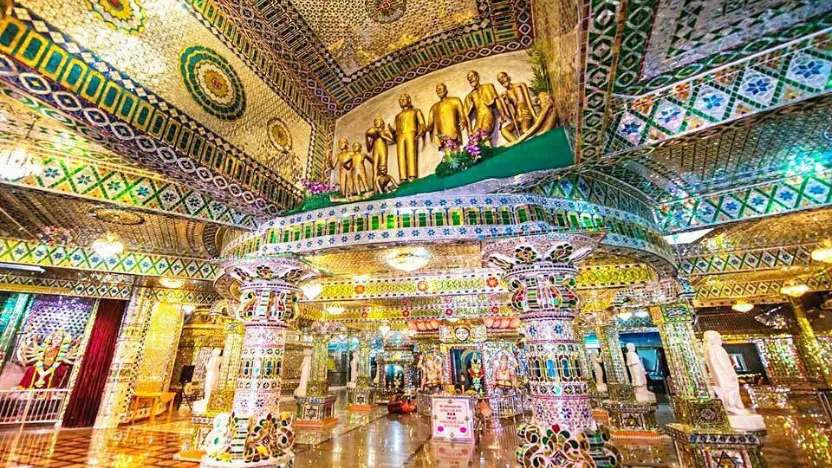
Along the busy stretch of Johor Bahru, beside the railway tracks between Jalan Tun Abdul Razak and Jalan Mohd Taib, stands a temple that many consider not just a place of worship, but a symbol of faith, vision, and perseverance. Arulmigu Sri Rajakaliamman Temple is one of the oldest Hindu temples in Johor Bahru, carrying with it more than a century of devotion and history.
Its journey began in 1922, when the Sultan of Johor gifted the land for a small shrine. What started as a humble shelter slowly became a sacred space where devotees gathered to pray, seek blessings, and find peace. Though simple in structure, the temple’s spiritual strength drew people from all walks of life.
In 1991, the responsibility of the temple was passed to Sri Sinnathamby Sivasamy, who is lovingly known by devotees as Guru Bhagawan Sittar. Inheriting the administration from his father, he carried not just a title, but a mission to transform the modest shrine into a grand temple worthy of the divine presence it housed.
The road was not easy. There were many struggles, challenges, and obstacles. Yet with unwavering faith and dedication, the temple was rebuilt and officially reopened in 1996. What many saw as impossible, Guru saw as divine purpose.
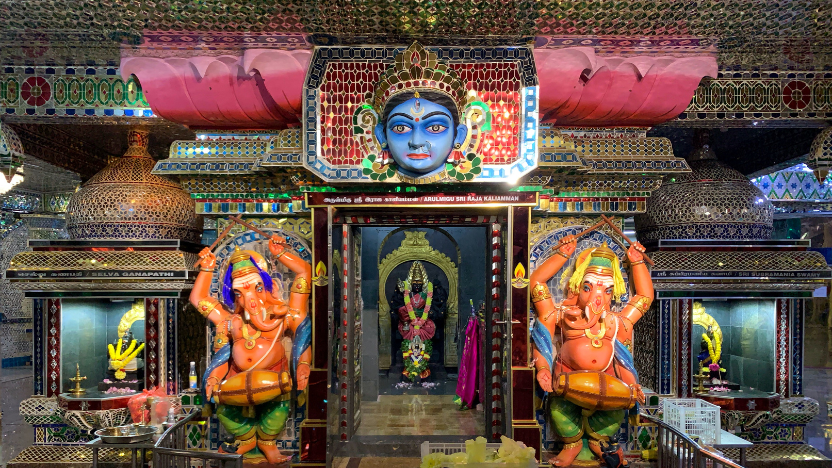
Years later, during a visit to Bangkok, a life-changing inspiration came to him. While travelling in a tuk-tuk, he noticed a brilliant light shining like a diamond from far away. Curious, he asked the driver, who told him it was a temple. When he reached the place, he discovered that the dazzling light came from glass artwork decorating the temple entrance.
That moment stayed in his heart.
He believed that if a small section of glass could shine so brightly, imagine a temple fully adorned in light. He returned with a dream — to create a temple that would sparkle with beauty, devotion, and divine attraction. In 2008, transformation works began, and by October 2009, the temple emerged as Malaysia’s famous Glass Temple.
Today, stepping inside feels like entering another world. Light from chandeliers dances across the walls, pillars, ceilings, and doors. Nearly 90 percent of the temple is covered with over 300,000 pieces of colourful glass in shades of red, blue, yellow, green, purple, and white. Every reflection creates a feeling of wonder, as though the temple itself is glowing with grace.
One of the most sacred spaces within the temple is the Athma Lingam sanctuary, where a lotus is placed for Lord Shiva. Devotees gently pour rose water and offer heartfelt prayers there. The walls of this sanctuary are especially unique, covered entirely with 300,000 Mukni Rudraksha beads brought from Nepal. Each bead, according to Guru, was embedded with prayer chants, turning the walls into living devotion.
Beyond its beauty, the temple also carries a message of unity and humanity.
Inside stand statues of Gautama Buddha, Guru Nanak Dev Ji, Sai Baba, and Mother Teresa. Guru Bhagawan Sittar believes these great souls were messengers of God, and their presence reminds visitors that faith may have many paths, but compassion is universal.
There are also golden sculptures near the ceiling portraying the cycle of life: birth, youth, adulthood, old age, and death. It serves as a reminder that life is temporary, but the soul’s journey continues.
The temple today is fully air-conditioned, with a vegetarian cafe and function hall, welcoming devotees and visitors with comfort and warmth. Yet despite all its grandeur, its true beauty lies in the story behind it, a small hut transformed by faith into a shining sanctuary.
Source : Temple Indian , Tourism Johor , JOHOR NOW