

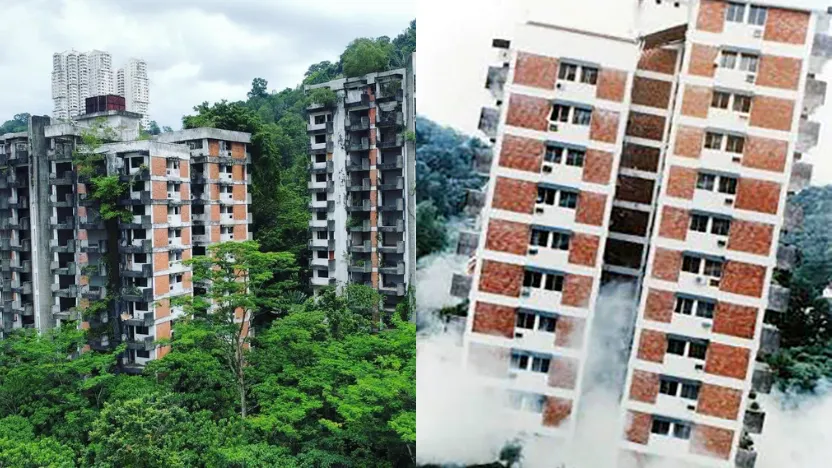
For more than three decades, the skeletal remains of Highland Towers have stood as a haunting reminder of one of Malaysia's worst disasters.
Hidden among the hills of Ulu Klang, the abandoned apartment blocks have become synonymous with tragedy, heartbreak and mystery. While generations of Malaysians have heard stories about the infamous towers, few can forget the horrifying events of December 1993 that changed countless lives forever.
Now, after years of legal disputes and uncertainty, the Ampang Magistrate's Court has allowed the Ampang Jaya Municipal Council (MPAJ) to proceed with action on the remaining Highland Towers buildings, paving the way for their long-awaited demolition.
But before the final chapters of Highland Towers are written, it is worth remembering why the site remains etched in the nation's memory.
Located in Taman Hillview, Ulu Klang, Highland Towers consisted of three 12-storey apartment blocks built between 1975 and 1978.
The apartments housed both locals and expatriates and were considered a desirable residential address due to their hillside location.
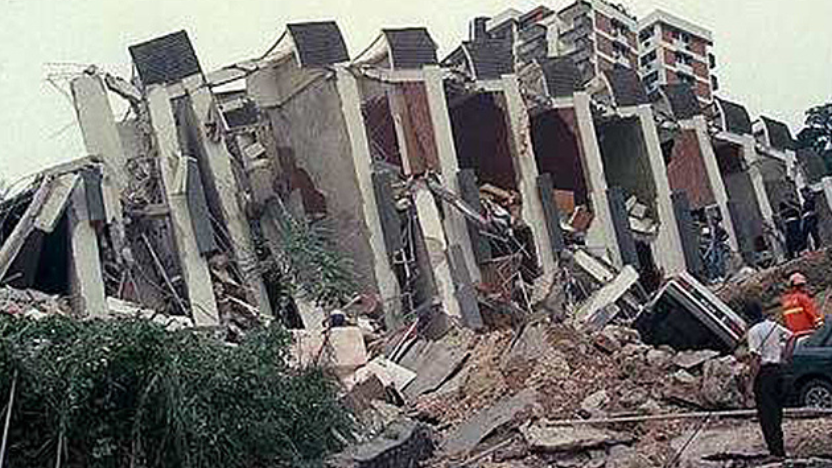
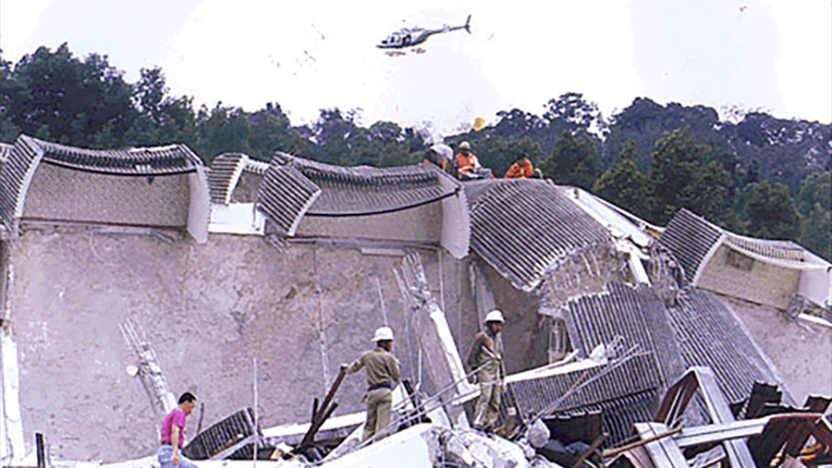
Everything changed on Dec 11, 1993. After days of relentless rain, disaster struck at approximately 1.30pm when Block 1 suddenly collapsed. Within seconds, the entire building crumbled into a mountain of mud, concrete and twisted steel, burying dozens of residents beneath the debris. The collapse triggered one of Malaysia's largest rescue operations.
More than 500 rescue personnel from Malaysia, Singapore, Japan, France, the United Kingdom and the United States worked tirelessly around the clock, hoping to find survivors trapped beneath the rubble.
For days, the nation watched and prayed. Within the first 24 hours, only three survivors were pulled from the wreckage. Tragically, one later succumbed to her injuries.
As hopes faded, rescue workers continued their search despite fears that the remaining towers could also collapse.
The search for survivors officially ended on Dec 17. When recovery operations concluded five days later, 48 lives had been lost.
Malaysia declared the incident a national tragedy. Investigations later revealed that the disaster was caused by a massive landslide behind the building.
Heavy rainfall had overwhelmed drainage systems around the hillside. At the same time, nearby development projects had reportedly stripped parts of the hill of vegetation and natural ground cover.
Water, mud, sand and silt accumulated behind the retaining walls supporting the slope. Eventually, approximately 100,000 cubic metres of earth gave way. The landslide destroyed retaining structures, weakened the foundation of Block 1 and ultimately caused the building to collapse.
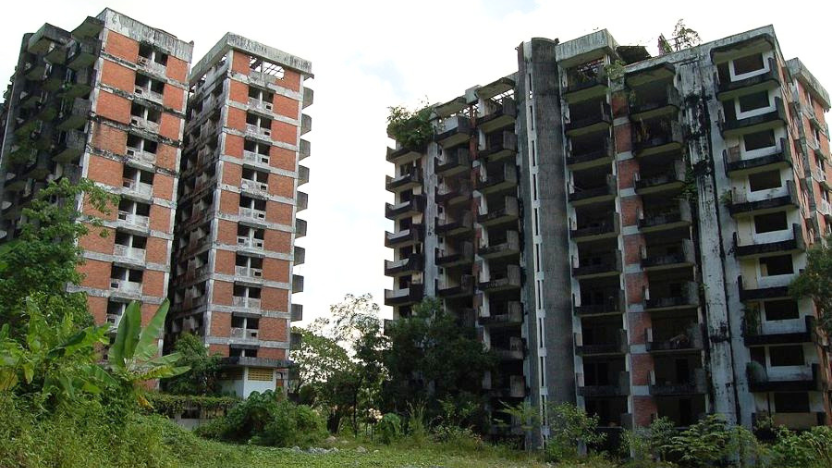
In the aftermath, residents of Blocks 2 and 3 were immediately evacuated. Although there were initial discussions about repairing the remaining buildings, engineers later determined that they were structurally unsafe.
The towers were abandoned. And they have remained abandoned ever since. Years after the collapse, legal battles followed. Residents sought justice through lawsuits against developers and several parties linked to the project. In 2004, a settlement saw compensation paid to affected residents and property owners.
Yet no amount of compensation could erase the trauma endured by survivors and the families of those who never returned home. A memorial plaque was later erected at the site to honour the victims.
Today, it remains one of the few physical reminders of the lives lost. As years passed and the towers stood empty, another chapter of Highland Towers began. The abandoned buildings slowly transformed into one of Malaysia's most infamous urban legends. Stories of strange encounters emerged.
One of the most well-known tales involves a taxi driver who allegedly picked up a young woman late at night and drove her to Highland Towers.
When he asked why she needed to visit the abandoned site, she calmly replied that she had left something important behind.
"My body," she reportedly said.
The terrified driver turned around only to find his passenger had vanished. Another popular story tells of a paranormal investigator who encountered a young boy wandering through the deserted building.
According to the tale, the child revealed a severely injured face and quietly explained that he was searching for a missing arm buried somewhere within the ruins. Whether fact or fiction, such stories spread rapidly and became part of Malaysian folklore.
Locals spoke of unexplained noises, shadowy figures and eerie cries echoing through the empty corridors. For many, Highland Towers became more than a disaster site. It became a symbol of unresolved grief.
Today, the remaining towers are little more than decaying concrete shells overtaken by nature. Vandalism, trespassing and years of neglect have left the buildings in a dangerous state.
With demolition now expected to move forward, a physical landmark that has loomed over Malaysia's collective memory for more than 30 years may soon disappear.
But while the buildings may be removed, the memories will remain. Highland Towers was not just an apartment collapse.
It was a tragedy that claimed lives, shattered families and forever changed how Malaysians viewed hillside development and construction safety.
Long after the final walls come down, Highland Towers will be remembered as a disaster the nation can never forget.
Image Credit : Astro Awani , Utusan Malaysia
Source : Fly FM , Gempak