


The sacred colours of Anjaneyar come to life as the powerful chant of “Jai Shree Hanuman” echoes around us.
The voices belong to the fearless Gurkha warriors from a nearby army barrack, their devotion echoing through time. In the 1920s, these brave soldiers, stationed in a remote corner of Malaya, carried within them a deep spiritual yearning. Far from their homeland, they sought solace in the worship of Anjaneyar, the divine monkey warrior revered with unwavering faith in Nepal.
United by devotion, the Gurkhas identified a serene spot close to their barracks and began building a humble shrine. Upon its completion, they rejoiced, believing that their beloved Anjaneyar now watched over them. The deity stands gripping the sacred Kaumodaki, his divine mace, poised eternally to vanquish evil forces that torment his devotees. His face radiates bliss and compassion, as though assuring protection from the endless cycles of karma.
His gaze stretches across the vast Indian Ocean, as if searching for Lanka, recalling the moment described in the Sundara Kandam when Anjaneyar located Sita in Ravana’s enchanted Ashoka Vatika and reassured her that Lord Rama would soon cross the ocean to rescue her. Just as Sita’s suffering would end, devotees believe their burdens too dissolve upon reaching the holy abode of Sri Anjaneyar at Port Dickson.
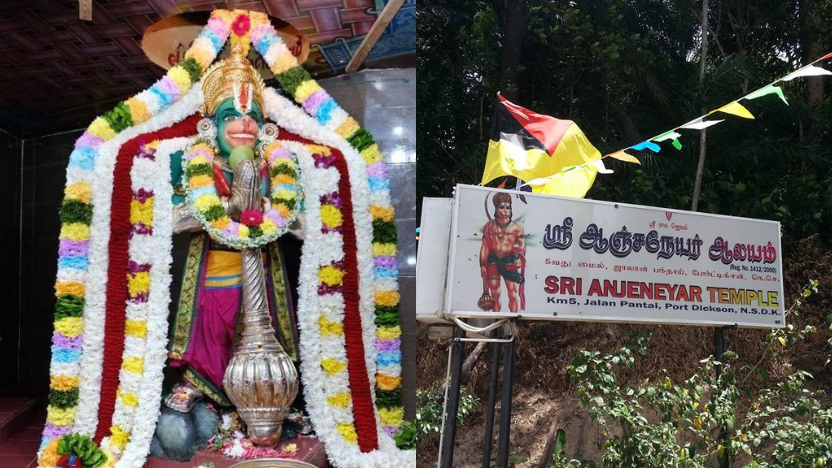
One of the most intriguing beliefs surrounding this temple is the mysterious turning of Anjaneyar’s emerald-green visage towards the sea. Devotees recount that in the 1960s, a British tourist photographed the idol when it faced straight ahead. Years later, upon returning, he was astonished to find the deity gazing towards the ocean. Since then, this legend has been passed down through generations. Many believe Anjaneyar now watches over those who traverse the Straits of Malacca, guarding them from unseen dangers and malevolent forces lurking beneath the restless waters. This mystical occurrence continues to draw devotees from near and far.
Saturday, known as Shani kilamai, holds special significance in Hindu tradition as the day ruled by Saneeswaran, the stern dispenser of karmic justice. To ease the weight of Saturn’s influence, devotees seek refuge in the compassionate grace of Anjaneyar. On this day, worship offered to Hanuman is believed to subdue the harsh effects of karma. Devotees arrive with deep surrender, offering tulsi garlands, betel leaf malas and the traditional vadamala made of lentil fritters. Anjaneyar, however, accepts all forms of devotion equally, blessing each heart that bows before him.
Among the many testimonies of faith is that of a humble family who faithfully attended Saturday prayers for years. Struggling financially and living in a rented home, they prayed earnestly for stability. Their worship was simple: lighting a vilakku and chanting the Hanuman Chalisa with devotion. In time, their prayers were answered. They found a home within their means, and their loan approval came without obstacles. Overwhelmed with gratitude, they returned to the temple with a handmade vadamala, prepared while chanting Anjaneyar’s sacred name. As they adorned the deity, tears of joy flowed freely, their hearts brimming with thankfulness.
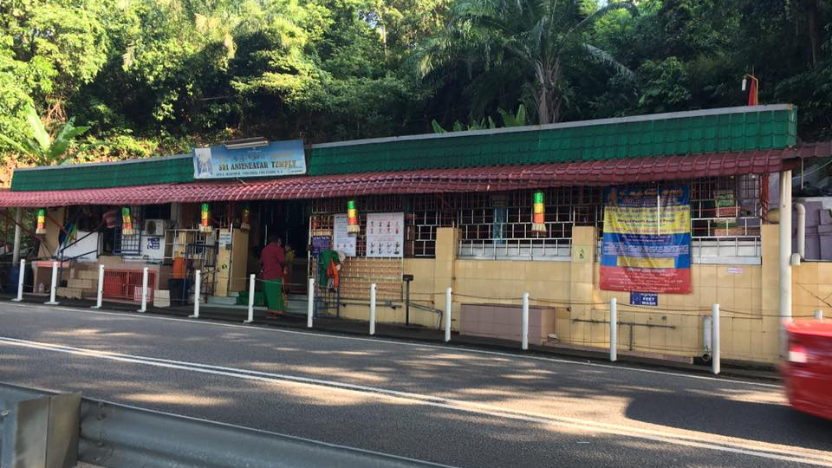
Many devotees speak of divine visions experienced within the sanctified grounds of the temple. Some have seen Anjaneyar in deep meditation, clothed in a white veshti, his radiant form emanating immense spiritual power. During Hanuman Jayanthi, a devotee witnessed Anjaneyar soaring above the temple, circling the skies with his mighty mace, showering blessings upon the gathered devotees. Though fleeting, such visions leave an everlasting imprint on the soul.
A lorry driver from Port Dickson, once struck by a severe stroke, was advised to seek Anjaneyar’s grace. After surgery, he attended prayers every Saturday, meditating silently for an hour. Over three years of unwavering devotion, his health was fully restored, and he returned to life with renewed strength and faith.
Another devotee, Mr Jeganathan, experienced a life-altering dream. Formerly a fisherman who worked the waters opposite the temple, he dreamt of approaching the shrine alone, only to be enveloped by a radiant divine presence. Awakening with a profound spiritual awakening, he renounced fishing, embraced vegetarianism and dedicated his life to selfless service for the temple, offering his time and soul in devotion.
The healing grace of Anjaneyar is also reflected in the story of a young child afflicted with a speech impediment. Following spiritual guidance, the mother brought her son to the temple every Saturday. After ritual worship involving butter offerings and heartfelt prayers, the child gradually regained his ability to speak clearly. The mother firmly believes it was Anjaneyar’s compassionate blessing that healed her son.
Within the inner sanctum stands a childlike karungkal statue of Anjaneyar facing the north-west direction, governed by Vayu, the wind deity and spiritual father of Anjaneyar. This placement is believed to enhance the flow of divine energy, dispelling negativity and removing obstacles. Ritual bathing of this granite form has further amplified its spiritual potency. Devotees attribute blessings of children, prosperity in business and inner peace to the grace emanating from this sacred space.
May the boundless compassion of Lord Anjaneyar continue to protect devotees from unseen calamities, guide them through life’s storms and grant peace to all who seek refuge at this mystical temple by the sea.
Source / Image Credit : mysticaltemplesofmalaysia , temple-indian