


Jai Vinayagar. It is believed that those who surrender at the sacred feet of Lord Vinayagar are never abandoned, and victory ultimately finds its way to them.
Sri Subramanyar Temple in Pandamaran, Klang - One of the most widely spoken incidents associated with the temple dates back to a gloomy afternoon in March 2008. A group of construction workers arrived at the temple premises under instructions from a business owner who was disputing the ownership of land near the temple entrance. Their task was to survey the area prior to demolishing the entrance gate the following day.
As part of the preliminary work, the leader of the crew took several photographs of the site. Upon reviewing them, the workers were stunned. The images appeared to reveal a colossal form of Lord Vinayagar, stretching from the earth toward the sky. Interpreted as a divine manifestation and a warning against desecrating sacred ground, the sight left the workers visibly shaken. They refused to proceed with the demolition. Soon after, the business owner abandoned his plans and ceased all actions against the temple. For devotees, this incident reaffirmed Vinayagar’s role as the guardian who removes obstacles and wards off harm.
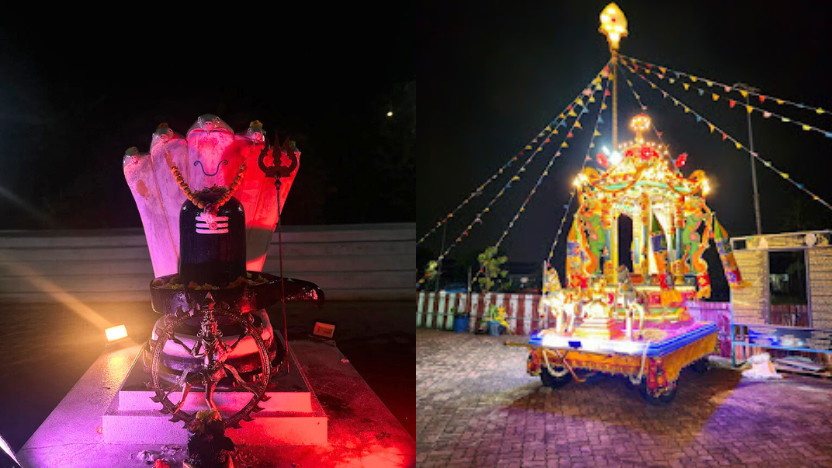
The spiritual symbolism of the temple is further strengthened by the presence of a towering Vel, the divine spear of Lord Subramanyar situated at the rear of the temple. The Vel is revered as a force that destroys ignorance and dispels negative influences, illuminating the path of righteousness. This sacred emblem reflects the core philosophy of Kaumara worship, which flourishes strongly within the temple grounds.
Historically, the temple was founded through the collective efforts of plantation workers from the Golden Hope Plantation during the British colonial period in Malaya. Despite their modest means, these labourers contributed whatever they could to construct a place of worship using brick and mortar, driven by the desire to leave behind a spiritual legacy for future generations. Their devotion laid the foundation for what would later become a revered spiritual centre in Pandamaran.
The original deities : Vinayagar, Subramanyar, and Mariamman, once enshrined in the main sanctum, are now preserved at the rear of the temple. These aged statues hold deep historical and spiritual significance. Even today, devotees make it a point to offer prayers to them before leaving the temple, honouring the divine presence that has safeguarded the community for decades.
Interestingly, the temple was initially intended to be dedicated to Goddess Mariamman. However, at the final stage, the principal deity was changed to Lord Subramanyar. Devotees believe this transition was divinely ordained, allowing the spiritual energy of Kaumara worship to take root in the area. Nevertheless, Mariamman’s presence remains strongly felt within the temple.
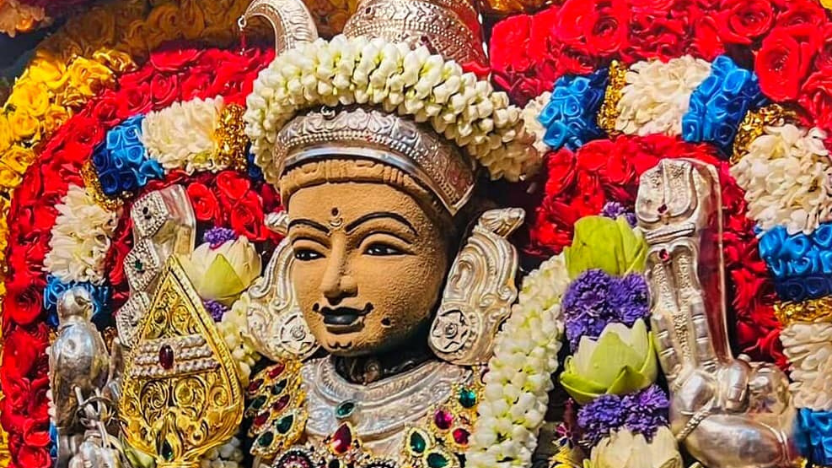
During restoration works, a construction worker tasked with reinforcing cement columns reportedly carried out his duties carelessly. That very night, he experienced a vivid dream in which Goddess Mariamman sternly reprimanded him for his negligence. Deeply shaken, the worker sought forgiveness the next day and thereafter carried out his responsibilities with renewed sincerity and diligence.
Over the years, numerous devotees have shared experiences that reinforce the temple’s reputation as a place of divine grace. In one instance, a man of Abrahamic faith visited the temple in deep distress following prolonged marital discord. Acting on the advice of a spiritual healer, he requested prayers to be conducted on his behalf. After a puja was performed, he was given vibhuti and tirtham. Within days, his estranged wife returned home, and the couple reconciled.
In another poignant account, a woman suffering from acute kidney failure was given only days to live. Her husband, overwhelmed by despair, came to the temple and pleaded fervently before Lord Subramanyar. As he wept at the inner sanctum, flowers reportedly fell onto the deity’s pedestal, a sign he believed was divine assurance. His wife later recovered and lived long enough to see her children grow into adulthood.
A young couple from the United States, unable to conceive despite undergoing medical treatments, were brought to the temple by relatives. They sought Subramanyar’s blessings with sincere prayers. Upon returning home, they were soon blessed with children. In gratitude, the couple later contributed toward the temple’s Maha Kumbhabhishekam.
Pandamaran ,Klang Sri Subramaniyar Devastanam
Another deeply moving incident involves a woman suffering from severe marital distress who attempted to end her life in a road accident. Though her vehicle was destroyed, she survived. In a dazed state, she recalled being led to the temple by a young boy clad in a loincloth, who reassured her that her life had purpose. When she regained full consciousness, the boy had vanished. She later realised the figure was none other than Lord Subramanyar himself. The experience transformed her life, inspiring her to serve the underprivileged and rebuild her mental well-being.
Pradosham poojai holds special significance at the temple. Following the ritual, a unique prasadam is distributed, prepared by a devotee who regularly undertakes pilgrimage to Mount Kailash. This offering contains water from Lake Manasarovar and soil from Mount Kailash, believed to be infused with powerful spiritual energy. Many devotees attest to receiving relief from financial hardships and blessings of childbirth after consuming this prasadam.
The temple’s sacred water tank also holds profound spiritual importance, particularly for ancestral rites. Devotees perform prayers for departed souls and immerse themselves in the tank upon completion, seeking peace and liberation for their ancestors.
At the entrance of the temple stands a striking statue of Muneeswaran astride a horse, symbolising protection and vigilance. Devotees customarily offer prayers here before entering the temple. A frequently recounted incident tells of a factory worker whose motorcycle stalled near the shrine. As he lit a cigarette, he reportedly heard the neighing of a horse and witnessed a white horse merging into the Muneeswaran statue. The following day, his wife returned to the shrine with offerings, seeking forgiveness on his behalf.
Source / Image Credit : mysticaltemplesofmalaysia , Danaraj Anbalagan