


From title disputes and shifting casting announcements to ED searches, plagiarism allegations, and finally, Central Board of Film Certification (CBFC) demands that bordered on the absurd, the noise surrounding Parasakthi has been relentless. In the midst of this chaos, Sudha Kongara’s carefully mounted historical drama risked being reduced to controversy rather than craft.
Starring Sivakarthikeyan, Ravi Mohan, Atharvaa, and Sreeleela in her Tamil debut, Parasakthi chronicles the 1965 Anti-Hindi imposition agitation in Tamil Nadu with painstaking attention to detail. The film unfolds over a remarkably tight timeline.
“From the intermission to the climax, it is just 19 days, from January 24–25 to February 12, 1965,” Kongara tells THR India.
In a candid conversation, the director addresses the storm surrounding the film’s release while revealing the creative and logistical decisions behind the project.
When asked how she has been coping post-release, having earlier mentioned plans to catch up on films she missed over the past year, Kongara admits there has been little respite.
“Not at all. We have a long way to go before we take the film to where it needs to reach and I have to do it in this day and age of marketing,” she said.
“Just allowing your film to speak doesn’t seem to be enough. I’m hoping it takes off during the Pongal weekend and reaches more people.”
On whether the film is being misunderstood or deliberately misrepresented, Kongara did not mince her words.
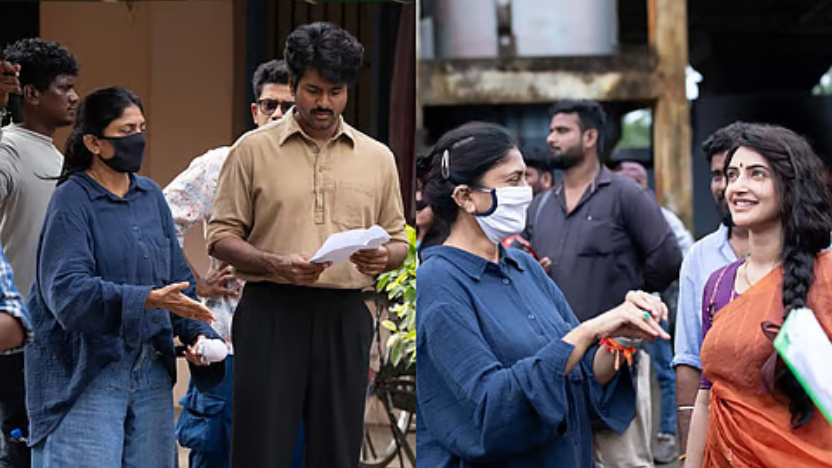
“There is slandering, defamation of the worst kind, hiding behind unknown IDs. We have to counter that. You wonder where it is coming from and you know where it is coming from.”
When pressed further, she referred to a post she had encountered on X (formerly Twitter), which suggested that securing CBFC certification was less important than apologising to actor Vijay’s fanbase to ensure the film’s success.
For Kongara, such narratives exemplify how discourse around cinema is increasingly driven by misinformation and targeted hostility, rather than engagement with the work itself.
In a pre-release interview, Kongara had described the CBFC as democratic. Asked if she still stood by that statement after receiving the final list of cuts, her response was measured but revealing.
“When I gave that interview, I hadn’t received the cut list. I was only told that the film would be certified and that there would be audio cuts,” she explained.
“Two days before release, I got the cut list at 11 in the morning. I had only the next day to make the cuts and resubmit the film. The day after was release day. Where was the time to fight it?”
The process, she said, was exhausting.
“We didn’t sleep for 70 hours. It was hell.”
Some of the demands, she felt, were baffling.
“They asked us to remove the word ‘Sirikki’. It was ridiculous, there are songs that openly use that word. Why cut it here?” she said, adding that she had been extremely cautious while making the film.
However, the most difficult moments involved scenes of intense political and social violence.
“When a self-immolation scene was asked to be cut by 50 per cent, I reduced it by just two-and-a-half seconds. The Pollachi massacre scene was cut from 17 seconds to 10 seconds.”
Source / Image Credit : hollywoodreporterindia , The New Indian Expr