

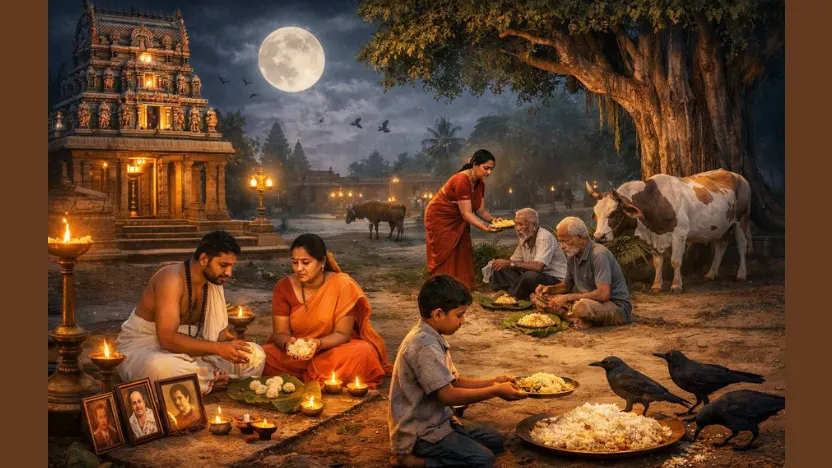
Chithirai Amavasai is a deeply sacred day dedicated to remembering and honouring our ancestors. It is believed that offering Pithru Tharpanam on this day brings blessings into the home and helps remove various obstacles in life. Traditionally, along with performing rituals for ancestors, feeding at least four people in their memory is considered a noble and meaningful act.
The Tamil month of Chithirai is filled with auspicious occasions and spiritual significance. While Chitra Pournami holds great importance, Chithirai Amavasai too is regarded as equally powerful in its own way.
- Performing ancestral rites during this Amavasai is said to yield immense spiritual benefits and help fulfil one’s duties towards forefathers.
- Charity done on this day, especially food (annadhanam) and clothing (vasthra dhanam), is believed to remove past karmas and bring double blessings.
- sincere offerings are believed to ease life’s challenges such as delays in marriage, financial struggles, career difficulties, and recurring health issues.
When offered with a pure heart and genuine intention, these acts not only uplift the devotee’s life but also bring peace and contentment to the souls of their ancestors. Through these rituals, many seek a path filled with positivity, prosperity, and inner peace.
According to traditional beliefs, there are 96 types of Tharpanam rituals described by acharyas. However, it is commonly practised to offer Tharpanam on every Amavasai and at the beginning of each Tamil month as a way of maintaining a spiritual connection with ancestors.
Devotees observe fasting, perform prayers, and engage in acts of charity on Chithirai Amavasai. A meaningful custom followed on this day is offering food first to crows, as they are considered messengers of the ancestors. Only after the crow partakes in the offering do family members begin their meal. Additionally, performing annadhanam (feeding the needy) or offering clothes to the underprivileged is believed to greatly please the ancestors and invite their blessings into the household.
Source : Tamil Samayam , One India