

In a landmark moment for India’s cultural and historical heritage, the Netherlands has officially returned the famed 11th-century Chola dynasty copper plates, widely known as the Leiden Plates, to India after centuries abroad.
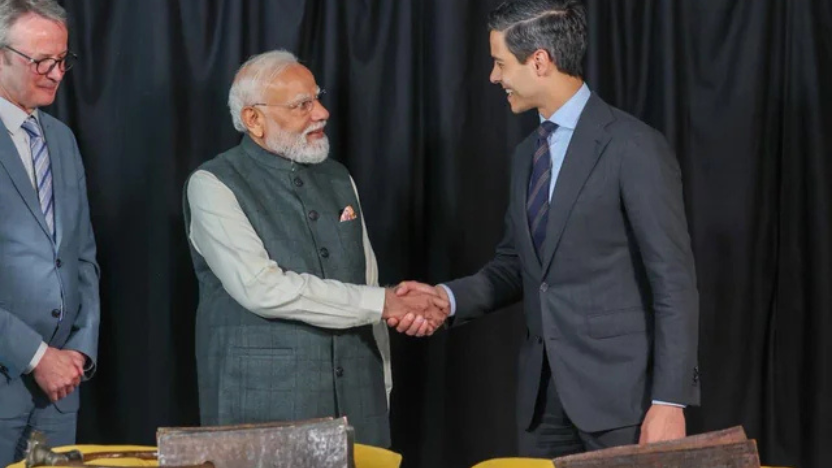
The restitution ceremony, attended by Indian Prime Minister Narendra Modi and Dutch Prime Minister Rob Jetten, marked a deeply emotional and symbolic moment for India, especially for Tamil heritage and the legacy of the mighty Chola Empire.
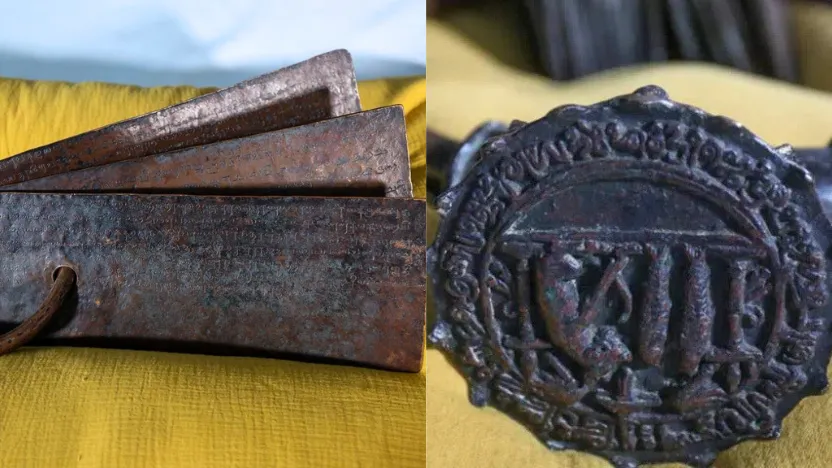
The Leiden Plates consist of 21 large copper plates and three smaller plates inscribed in both Tamil and Sanskrit. These royal charters date back to the reign of Rajendra Chola I and formally document grants made to the Chulamanivarma Buddhist vihara in Nagapattinam, Tamil Nadu, fulfilling an oral commitment originally made by his father, the legendary emperor Rajaraja Chola I.
Weighing nearly 30 kilograms, the plates are bound together by a bronze ring bearing the royal seal of the Chola dynasty, making them one of the most significant surviving records of the empire’s administrative, cultural and maritime excellence.
Prime Minister Narendra Modi described the occasion as “a joyous moment for every Indian,” stating that the plates stand as a reminder of the greatness of the Cholas, their rich culture and their extraordinary maritime influence across Asia.
The Leiden Plates had remained in the Netherlands since the 1700s after being taken there by Florentius Camper during the Dutch colonial presence in Nagapattinam. Since 2012, India has been actively pursuing their return through diplomatic and cultural channels.
According to the Ministry of External Affairs, the return of the plates is not merely about recovering artefacts, but about restoring an important chapter of India’s civilisational history.
“The homecoming of these plates carries deep emotional significance for the people of India,” the ministry stated.
Historians regard the Leiden Plates as priceless because they preserve crucial details about the Chola administration, religious harmony and maritime connections. While Rajaraja Chola I was a Hindu ruler, the inscriptions record grants made to a Buddhist monastery, reflecting the inclusive nature of the empire.
The inscriptions are divided into two sections, one written in Sanskrit and the other in Tamil, offering scholars valuable insight into the political, linguistic and cultural landscape of South India during the Chola period.
The return of the artefacts follows years of discussions between India and the Netherlands, supported by recommendations from the Intergovernmental Committee on Return and Restitution, which recognised India’s rightful claim over the plates.
For many, the repatriation represents more than diplomacy. It is the return of a forgotten piece of Tamil history, a reminder of an empire that once ruled the seas, shaped trade routes and left behind a legacy admired across the world.
After centuries away from home, the voices etched into the copper by the Cholas have finally returned to the land where their story began.
Source / Image Credit : telanganatoday , Reddit