


Not all heroes arrive with recognition or applause. Some simply go where they are needed most and remain there, long after attention fades and the world moves on. Their work is not defined by headlines but by the quiet difference they make in the lives of people who are often forgotten.
Dr Ravindra Kolhe and Dr Smita Kolhe are among those rare individuals. While many careers are measured through titles, promotions, and financial success, their life’s work has been measured in lives saved, communities strengthened, and hope restored in one of the most underserved regions of Maharashtra.
For more than three decades, the doctor couple charged only Rs 2 as consultation fees. Yet their story is not truly about money. It is about a deep commitment to serve where help was scarce and to remain where many others would have chosen to leave.
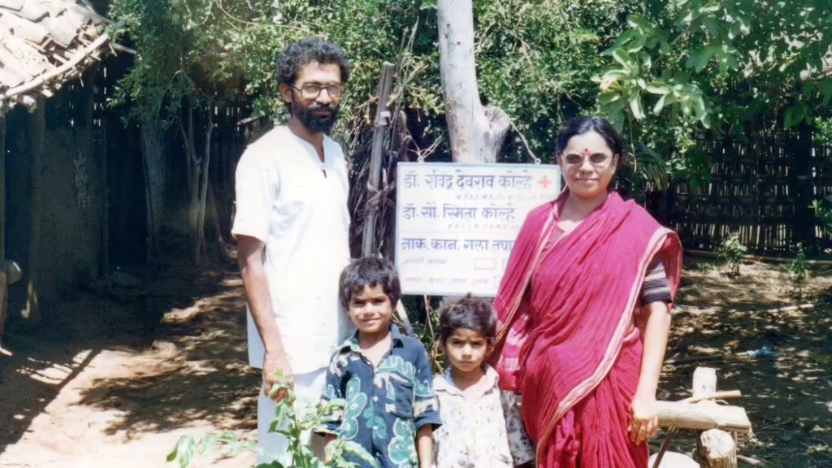
In the early 1980s, Dr Ravindra Kolhe made a life-changing decision to work in Bairagarh, a remote village located in the Melghat region. At the time, the area had almost no basic infrastructure. Roads were poor, electricity was limited, and medical services were virtually non-existent. Most doctors were unwilling to stay in such conditions. For him, however, this was not merely a professional posting but a calling to serve.
He also knew that such a life required a partner who would share the same dedication. When he decided to marry, he made his expectations clear. The marriage would be simple, a modest court registration costing only a few rupees. Life would involve long treks through forests to reach patients and surviving on a minimal monthly income. Many people declined such a proposal. Eventually, he met Dr Smita, who chose not only to accept the conditions but to embrace the mission wholeheartedly.
When the couple first arrived in Bairagarh, they were met with hesitation and mistrust. Years of neglect had made the villagers wary of outsiders. The reality they witnessed was deeply troubling. Infant mortality in the region was extremely high, with nearly two out of every ten newborns not surviving.
Trust did not come easily. It grew slowly through actions that showed the community the doctors were truly committed. One moment in particular became a turning point. When their own newborn child fell critically ill, many suggested that they rush to a hospital in the city where advanced treatment was available. Instead, the couple chose to treat their child in the same village where they treated everyone else. That decision demonstrated that they believed in the same care they provided to the community.
From that moment onward, the relationship between the doctors and the villagers changed. They were no longer seen as outsiders but as part of the community itself.
Over time, the Kolhes realised that healthcare alone could not solve the region’s problems. Illness often stemmed from deeper issues such as poverty, malnutrition, and lack of resources. Children suffered because families struggled to grow enough food, and many illnesses were linked to living conditions rather than purely medical causes.
Determined to address these root problems, the couple expanded their efforts beyond medicine. They studied agriculture and worked with local farmers to introduce sustainable farming methods. They helped develop fungus-resistant crops and encouraged practices that could improve food security and livelihoods.
Gradually, the region began to transform. Areas once associated with hardship and despair saw improvements in both health and economic stability. Infant mortality rates fell dramatically, and the community gained renewed confidence in its future.
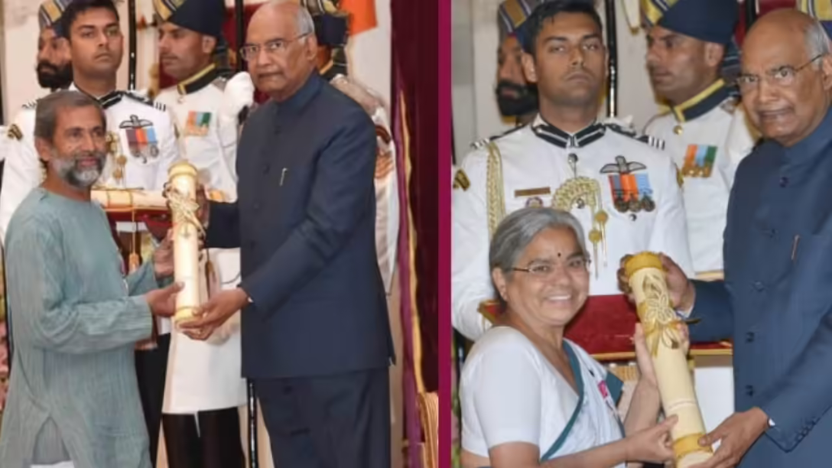
For 35 years, through difficult seasons and countless challenges, the Kolhes remained committed to the people they served. Their dedication eventually earned them national recognition, including the Padma Shri. Yet the true impact of their work cannot be measured by awards.
It lives in the healthier children who now grow up in the village, in families who have learned sustainable ways to support themselves, and in a community that no longer feels forgotten.
In a world where many people ask what they can gain, the Kolhes chose to focus on who needed them the most. Their journey shows that meaningful change does not always arrive with noise or recognition. Sometimes it begins quietly, with a decision to stay, to serve, and to keep showing up for those who need it most.
Source : The Better Hindu ,Reader's Digest , Samiran Saha