

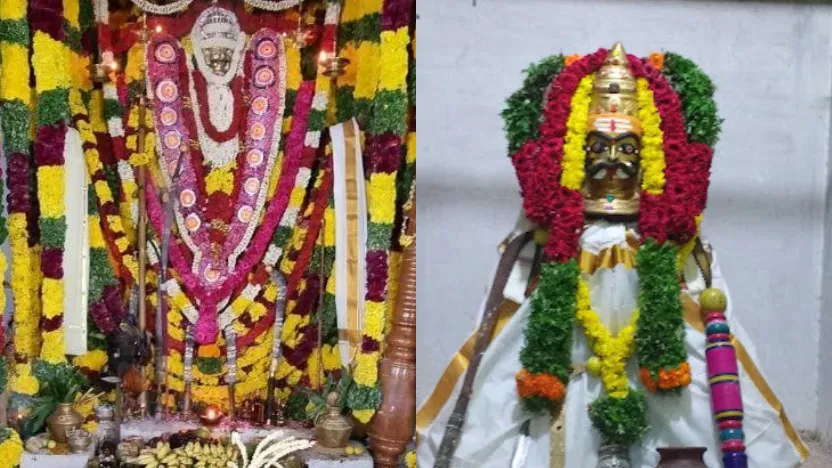
Deep in the southern districts of Tamil Nadu, faith in guardian deities continues to shape the spiritual identity of many villages. Among the most revered folk deities is Sudalai Madan, worshipped as a powerful protector believed to safeguard devotees from evil, injustice, and suffering. One of the most fascinating temples dedicated to him is the High Court Maharaja Sudalaimada Swami Temple in Thoothukudi district, a shrine deeply rooted in mystery, justice, and divine intervention.
According to sacred belief, Sudalai Madan is said to be the son of Lord Shiva and Goddess Parvati. Ancient legends state that Parvati performed intense penance in the thousand-pillared hall of Kailash after wishing for a child. Pleased with her devotion, Lord Shiva plucked a strand of his hair and cast it into a divine flame. From that sacred fire emerged Sudalai Madan.
The child was first fed with amirtham, the nectar of immortality, making him eternal. However, he later developed a hunger for flesh and wandered into cremation grounds, consuming burning corpses. Since Kailash was considered too pure for such acts, Lord Shiva instructed Sudalai Madan to descend to Earth and protect humanity. In return, devotees would offer him food, prayers, and worship.
Over time, Sudalai Madan became one of the most powerful folk deities worshipped across Tirunelveli, Thoothukudi, and nearby southern districts. Fridays are considered especially sacred for him, while grand annual festivals known as “Kodai” are celebrated with rituals, drumming performances, Villupattu, and spiritual trance ceremonies.
But among the many legends surrounding Sudalai Madan, the story behind the title “High Court Maharaja” remains one of the most extraordinary.
The story traces back to the village of Arumugamangalam, where a lonely cowherd named Chinnan lived a humble life. One day, while resting in the forest after grazing cattle, he witnessed a horrifying crime. Two robbers were chasing an innocent man who begged for mercy. Despite his fear, Chinnan watched helplessly as the attackers brutally murdered the man near a Sudalai Madan temple.
Before being killed, the innocent man reportedly cried out that Sudalai Madan would punish the criminals for their sins. The robbers ignored the warning and left the body behind.
Disturbed by what he had seen, Chinnan informed the villagers and bravely agreed to testify in court against the murderers. However, before the hearing, the criminals captured and tied him up inside a ruined building to stop him from appearing before the judge.
What happened next became village history.
When the court session began, Chinnan mysteriously appeared before the judge and gave detailed testimony against the murderers. His statement led to the criminals being exposed. Shocked, the accomplices rushed back to the abandoned building, only to find the real Chinnan still tied up and unconscious.
The villagers believed that Sudalai Madan himself had taken Chinnan’s form and entered the courtroom to deliver justice.
From that day onwards, devotees began worshipping the deity as “High Court Maharaja” - the divine protector who stands for truth, justice, and righteousness.
Even today, thousands of devotees visit the temple seeking justice in personal struggles, court cases, family disputes, and emotional hardships. Many believe High Court Maharaja listens to sincere prayers and protects those who have been wronged.
The temple continues to remain a powerful spiritual symbol of faith and justice, where folklore, devotion, and history intertwine across generations.
Source / Image Credit : hinduscriptures , YouTube Ukran Velan , High Court Maharaja , highcourtmaharaja.blogspot