


Have you ever heard of the Indian princess who became one of the most admired queens in Korean history?
Recently, we caught Priyanka Mohan's latest interview about her role in 'Made In Korea' and we can't get enough of the role she played and also the tale of Princess Sembavalam. Shenba's dream of Seoul turns into a beautiful yet challenging reality. This film beautifully intertwines the past with the present, echoing the story of the Tamil princess Sembavalam.
More than 2,000 years ago, a remarkable story unfolded that continues to fascinate historians and cultural scholars today. It is the story of Princess Sembavalam, believed to have travelled from ancient Tamilakam to Korea, where she married a Korean king and became a revered queen whose legacy still lives on.
The historical reference to this extraordinary journey is found in the Korean text Samguk Yusa, written in the 13th century by the Buddhist monk Iryeon. The chronicle records that a 16-year-old Indian princess named Heo Hwang-ok travelled across the seas and married Kim Suro, the founding king of the ancient Korean kingdom of Geumgwan Gaya. According to tradition, the princess came from a kingdom called Ayuta in southern India.
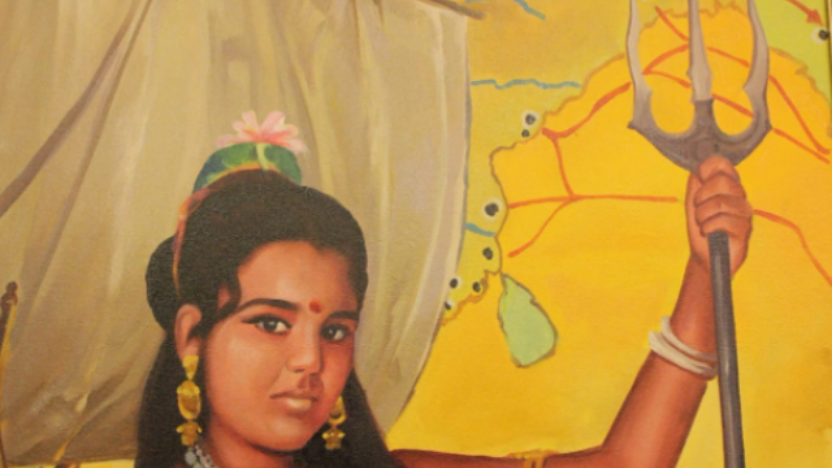
Many scholars believe that this Ayuta kingdom refers to the ancient Ay Kingdom, which was connected to the Pandyan Kingdom in southern India. Supporting this belief is the symbolic connection between the cultures. The Pandyan dynasty famously used the twin fish emblem on its flags, coins and royal insignia. Historical descriptions suggest that the princess carried a similar symbol during her voyage, strengthening the argument that her roots may lie in ancient Tamilakam.
In Tamil tradition, the princess is often referred to as Sembavalam, a name that means “red coral.” Interestingly, the Korean name Heo Hwang-ok also carries a similar meaning. Her journey across the seas was not made alone; historical accounts mention that she travelled with attendants, courtiers and companions who eventually settled in Korea. Their presence may have contributed to the cultural exchanges that developed between the two regions.
Today, millions of Koreans trace their ancestry to this historic union. It is believed that members of the Kim clan of Gimhae, Heo clan of Gimhae, and Lee clan of Incheon consider Queen Heo Hwang-ok as their ancestral mother. This remarkable connection means that nearly ten percent of Korea’s population acknowledges a shared lineage that traces back to this Indian princess.
The cultural similarities between Tamil Nadu and Korea extend beyond historical legend. Scholars and researchers have often pointed out striking parallels between the traditions of the two regions.
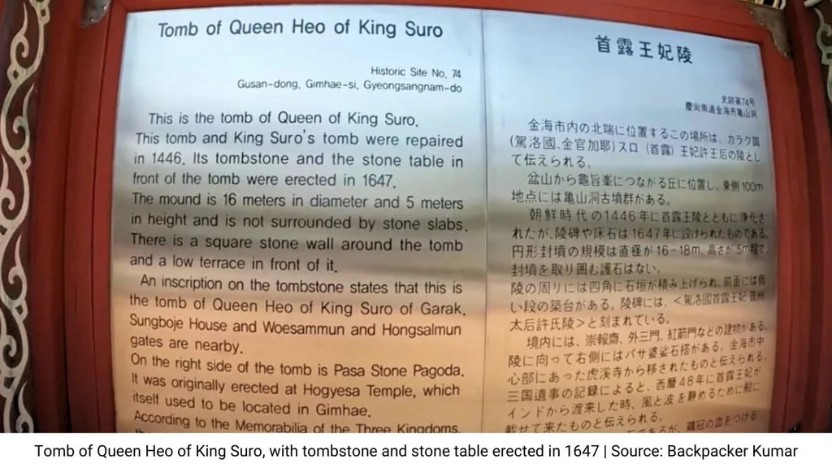
One example lies in the practice of honouring ancestors. In Tamil culture, the tradition of Nadukkal, or hero stones, commemorates individuals and their legacy. A similar reverence can be seen in Korea through the memorial traditions surrounding Queen Heo Hwang-ok, whose tomb continues to be visited and honoured.
There are also similarities in cultural practices. Rice has long been the staple food in both Tamil and Korean societies. Fermented foods, rice-based dishes and ceremonial sweets play important roles in celebrations and rituals in both cultures.
Traditional dances also show fascinating parallels. In Tamil Nadu, the folk dance Kummi is performed by women standing in a circle, clapping rhythmically as they move together in celebration, particularly during harvest festivals such as Pongal. In Korea, the traditional dance Ganggangsullae follows a strikingly similar pattern, where women form a circle, hold hands and sing while dancing during harvest celebrations. Though separated by geography, the resemblance between these traditions reflects how cultural ideas may have travelled across seas centuries ago.
Even children’s games reveal unexpected connections. In Korea, the game Gonggi is played using small pebbles. In South India, a similar game known as Pannangal is played with stones using almost identical rules. These small yet meaningful similarities continue to intrigue historians studying the cultural relationship between the two regions.
Language has also attracted scholarly attention. Researchers have noted certain lexical similarities between Korean and Dravidian languages, particularly Tamil. Linguistic studies have identified hundreds of words with similar pronunciation and meaning, leading some scholars to explore deeper historical interactions between the cultures.
All these elements together point toward a time when ancient Tamil seafarers were actively engaged in maritime trade and cultural exchange across Asia. The ancient Tamil kingdoms were known for their naval strength and trade networks that extended far beyond the Indian subcontinent.
The story of Princess Sembavalam stands as a powerful reminder of this early global connection. Long before modern technology or globalisation, people from different parts of the world were already building relationships through travel, diplomacy and cultural exchange.
Today, the story continues to inspire curiosity and pride. It reminds us that the connections between nations are often older and deeper than we realise. The journey of a young princess across the seas more than two millennia ago created a bridge between two cultures that still resonates in history.
The legacy of Princess Sembavalam shows that relationships between civilizations are not only built through trade and politics, but also through shared stories, traditions and human connections. Understanding such histories helps us appreciate how deeply interconnected the world has always been, and how the past continues to shape the bonds between nations today.
Source / Image Credit : Reflections.live , Clarity Circuit , Medium.com , claritycircuit.