

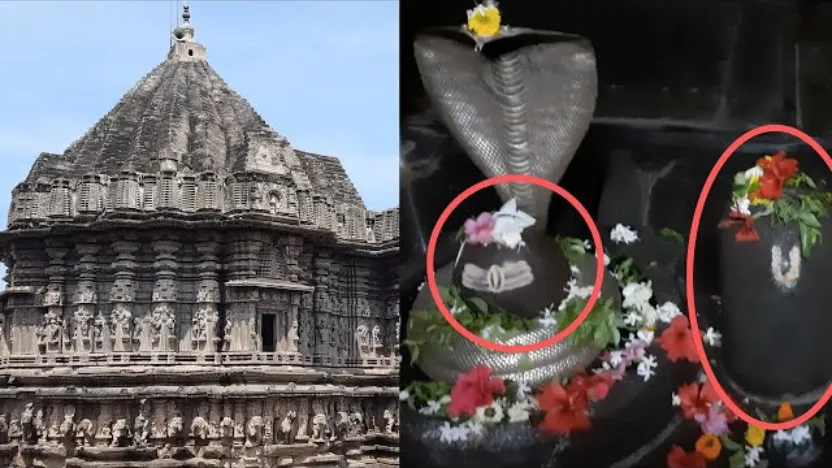
Kopeshwar Temple, one of Maharashtra's oldest and most spiritually significant Shiva temples.
Believed to be over 1,700 years old, this architectural masterpiece is often referred to as the "Khajuraho of Maharashtra" for its breathtaking stone carvings and extraordinary craftsmanship. Although it remains relatively unknown compared to many famous pilgrimage sites, devotees and history enthusiasts who visit the temple leave mesmerised by its beauty, serenity and divine atmosphere.
Every inch of the temple is adorned with intricate sculptures depicting Hindu deities, celestial dancers, musicians, elephants, mythical beings and scenes from sacred scriptures, making it both a place of worship and a masterpiece of ancient Indian architecture.
One of the most fascinating aspects of the Kopeshwar Temple is that its sanctum houses two sacred Lingas instead of one.
The first Linga represents Lord Vishnu as Dhopeshwar, while the second represents Lord Shiva as Kopeshwar.
This unique feature symbolises the harmony between the two principal deities and commemorates a powerful episode from Hindu mythology.
According to the Shiva Purana, King Daksha, father of Goddess Sati, strongly opposed her marriage to Lord Shiva.
When Daksha organised a grand yagna, he deliberately chose not to invite Shiva and Sati. Hurt by the insult, Goddess Sati travelled to her father's palace on Nandi to question him.
Instead of welcoming her, Daksha publicly humiliated both Sati and Lord Shiva before the assembled guests.
Unable to bear the disrespect shown to her husband, Goddess Sati sacrificed herself by entering the sacred fire of the yagna.
When Lord Shiva learned of her death, he was overcome with unbearable grief and divine anger. In his fury, he destroyed the yagna and severed Daksha's head.
It was Lord Vishnu who intervened to calm Shiva's wrath. Out of compassion, Shiva restored Daksha's life by replacing his severed head with that of a goat.
According to local belief, Lord Vishnu then brought the grief-stricken Shiva to Khidrapur to restore his peace of mind. Because Shiva arrived here in a state of divine anger, he came to be worshipped as Kopeshwar, meaning "The Wrathful Lord."
Lord Vishnu, who pacified him, is worshipped alongside Shiva as Dhopeshwar.
Why is there no Nandi in this Shiva temple?
Unlike almost every Shiva temple in India, the Kopeshwar Temple does not have Nandi seated directly in front of the sanctum.
According to tradition, when Goddess Sati travelled to Daksha's palace, she rode on Nandi. As a result, Nandi was not beside Lord Shiva during the tragic events that followed.
To commemorate this belief, no Nandi idol is placed before the sanctum. Instead, a separate shrine dedicated to Nandi stands nearby.
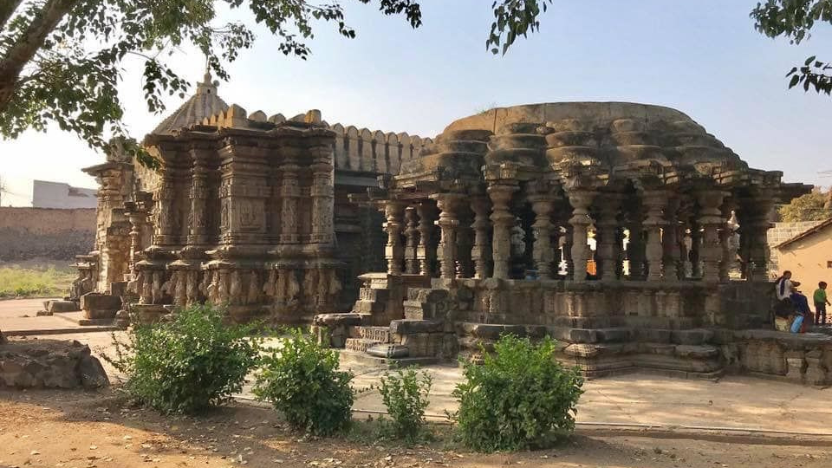
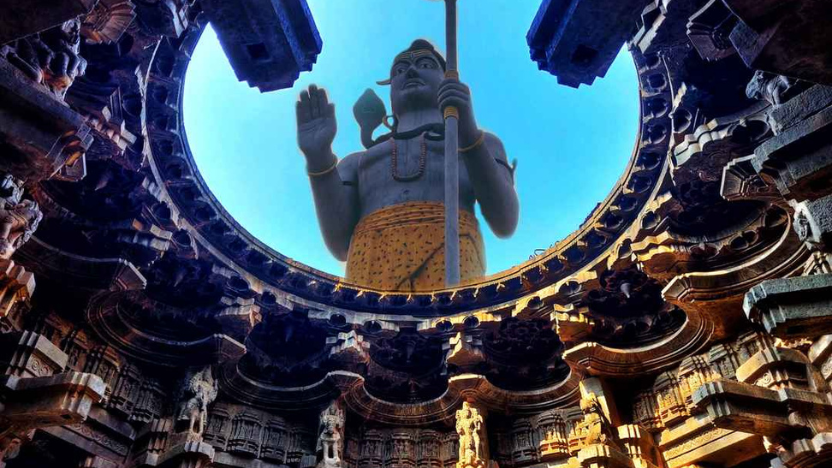
One of the temple's most remarkable architectural features is the Swarg Mandap, a beautifully designed prayer hall supported by 48 intricately carved pillars.
Remarkably, no two pillars are identical. Another unique feature is its open ceiling, allowing devotees to look directly towards the sky.
It is believed that the hall was used for conducting sacred yagnas and homams, with the open roof allowing the smoke from the rituals to rise naturally into the heavens.
The Kopeshwar Temple is widely regarded as one of India's finest examples of medieval temple architecture.
Inside the temple are 108 beautifully carved stone pillars, each featuring unique sculptures and intricate patterns. Every pillar tells a different story, showcasing the extraordinary craftsmanship of ancient artisans.
The outer walls are equally captivating, adorned with 95 beautifully sculpted elephants, each carved in a different posture and expression. Symbolically, these elephants appear to support the weight of the entire temple, representing strength, stability and devotion.
The temple walls are further decorated with exquisite carvings of Hindu gods and goddesses, Yakshas, Gandharvas, Apsaras, Surasundaris, animals and sacred motifs.
Visitors can also find beautifully sculpted scenes from the Ramayana, Mahabharata and Panchatantra, bringing India's timeless spiritual stories to life through stone.
More than just an architectural wonder, the Kopeshwar Temple is a sacred reminder of Lord Shiva's boundless love for Goddess Sati and Lord Vishnu's role in restoring peace after immense sorrow.
For devotees, a visit to this ancient shrine is not only an opportunity to witness one of India's greatest architectural masterpieces but also to experience the profound spiritual energy that has blessed this sacred place for nearly two millennia.