


The Smithsonian’s National Museum of Asian Art in the United States announced on January 28, 2026, that it will return three significant South Indian bronze sculptures : Nataraja, Somaskanda, and Saint Sundarar with Paravai to the Government of India after provenance research established that they had been unlawfully removed from temple settings. As part of a bilateral understanding, the Government of India has agreed to place the Nataraja on long-term loan to the museum, where it will feature in the exhibition The Art of Knowing in South Asia, Southeast Asia, and the Himalayas.
The three bronzes represent some of the finest traditions of South Indian sacred art. The Nataraja dates to the 10th century Chola period, the Somaskanda to the 12th century Chola era, and the depiction of Saint Sundarar with Paravai belongs to the 16th century Vijayanagara period. Originally consecrated temple icons, such bronzes were not merely artistic creations but living embodiments of divinity, carried in ritual processions and central to community worship.
The museum’s decision followed a systematic review of its South Asian collections. In collaboration with the photo archives of the French Institute of Pondicherry, researchers confirmed in 2023 that the bronzes had been photographed in Tamil Nadu temples between 1956 and 1959. The Archaeological Survey of India subsequently examined the findings and affirmed that the sculptures had been removed in violation of Indian law.
Museum director Chase F. Robinson stated that the National Museum of Asian Art remains committed to responsible stewardship and transparency in its collections. Formal arrangements to mark the transfer are currently being finalised between the museum and the Embassy of India.
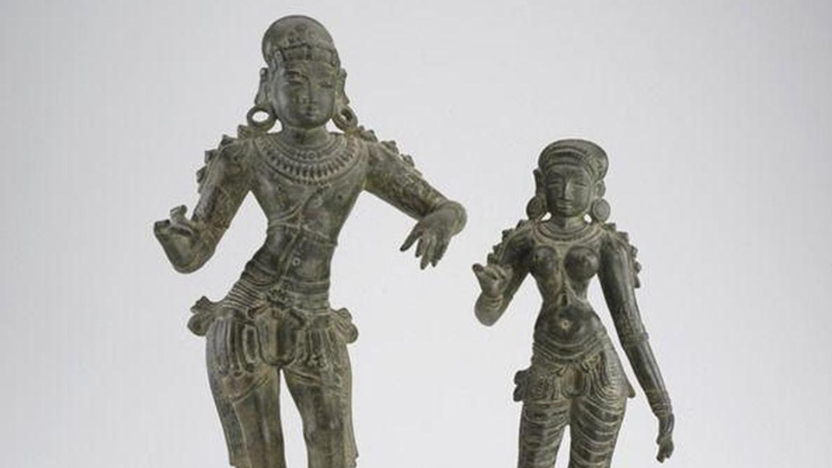
The return has been described as a milestone in the international recovery of India’s cultural heritage. Former Director-General of Police of the Tamil Nadu Idol Wing-CID, K. Jayanth Murali, noted that documentation and Mutual Legal Assistance Treaty materials had been submitted to the institution in 2022. He identified the Somaskanda bronze as a 12th-century Chola masterpiece illicitly removed from the Vishwanatha Swamy Temple in Alathur village, Thiruvarur district.
The case also highlights the role of independent research. In 2017, heritage researcher and India Pride Project founder S. Vijay Kumar published archival photographic comparisons linking all three bronzes to specific temples in Tamil Nadu. He has pointed out that gaps in provenance documentation, including the absence of ownership history prior to 1973 and inconsistencies in customs records had raised concerns for years. While welcoming the return of the Somaskanda and Sundarar-Paravai idols, he questioned the legal standing of retaining the Nataraja on long-term loan, emphasising that temple bronzes are traditionally regarded as sacred and inalienable.
Beyond the legal and diplomatic dimensions, the development raises broader questions about the journey of sacred objects across borders and the evolving standards of museum accountability. For many in Tamil Nadu, these bronzes are not simply historical artefacts but embodiments of living faith, whose return carries cultural, spiritual, and symbolic weight.
Source : The Hindu