


One of Malaysia's most distinguished jurists, Tan Sri Nallini Pathmanathan…
At 66, Justice Nallini stands as the most senior judge of the Federal Court and the first Indian woman appointed to the apex court of Malaysia. Her journey is not just one of professional excellence, but of breaking barriers and redefining what leadership looks like in the judiciary.
Her legal career began in 1986 after she was called to the Malaysian Bar. Over the next two decades, she built a formidable practice, first in matrimonial and industrial relations law before moving into commercial litigation, an area she admits was difficult to penetrate at the time.
“It must be said that it was difficult to penetrate the commercial field,” she reflected. “It was my work in employment law that allowed me to eventually obtain briefs and build up my portfolio of commercial cases.”
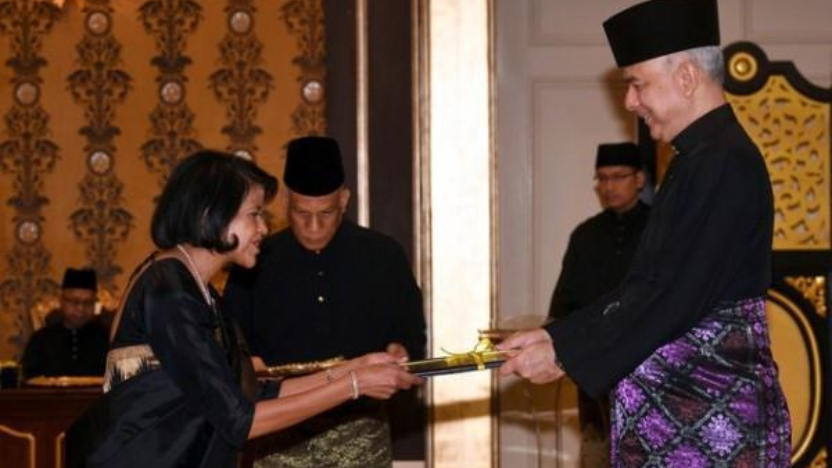
In 2007, she was appointed judicial commissioner, later elevated to the High Court in 2009, promoted to the Court of Appeal in 2014, and finally appointed to the Federal Court in 2018. She also served as a member of the Judicial Appointments Commission and was recently granted a six-month extension by the Yang di-Pertuan Agong.

Interestingly, law was not her first calling. “I never contemplated law as a career. I had always focused on medicine,” she shared. After an unsuccessful attempt at pursuing medicine, she completed a degree in Physiology at the University of London before taking up a graduate diploma in law at the University of Westminster at her late father’s suggestion.
“I enjoyed the law the minute I started the course,” she said, a turning point that would shape Malaysia’s legal landscape decades later.
Justice Nallini made history in 2007 as the first female of Indian ethnicity to be appointed to the superior courts in Malaysia.
“I believe I was invited because there was a need for diversity in the judiciary,” she said candidly. Malaysia is a plural society, and diversity is an important component contributing towards racial harmony.”
While many women speak of obstacles, she speaks instead of opportunity.
“I did not face obstacles to becoming a judge,” she said. “Gender has not posed an obstacle in the course of my judicial career thus far. Nor does gender define me as a judge.”
Yet she acknowledges the broader impact of representation.
“As a woman in the Judiciary I provide a degree of diversity of thought, approach and mindset that contributes towards more expansive and hopefully, more progressive judgements.”
Her words capture the quiet strength that defines her, not defined by gender, but fully aware of the responsibility it carries.
Justice Nallini’s tenure coincided with a transformative era for women in Malaysia’s judiciary. Today, women make up nearly half of the judges in the country, including eight out of 14 judges in the Federal Court.
“Our Chief Justice is female, as is the President of the Court of Appeal,” she noted proudly. The moot question would be, who is the endangered species: men or women?”
Her gentle humour underscores a powerful reality: progress is no longer aspirational; it is visible.
For Justice Nallini, the most fulfilling part of being a judge lies in independence.
“The independence and freedom to adjudicate on the cases before me,” she said. Independence not only in terms of freedom from influence, but the ability to study, absorb and analyse the law.”
She speaks of law not as rigid doctrine but as a living, evolving discipline, one that must be married to human realities.
“Of equal satisfaction is the ability to marry the law with the very human issues and problems that arise for litigants in every case.”
In recent months, she was part of a Federal Court panel that ruled the terms “offensive” and “annoy” under the Communications and Multimedia Act to be constitutional, a decision that drew public attention and further cemented her reputation for firm and reasoned judgment.
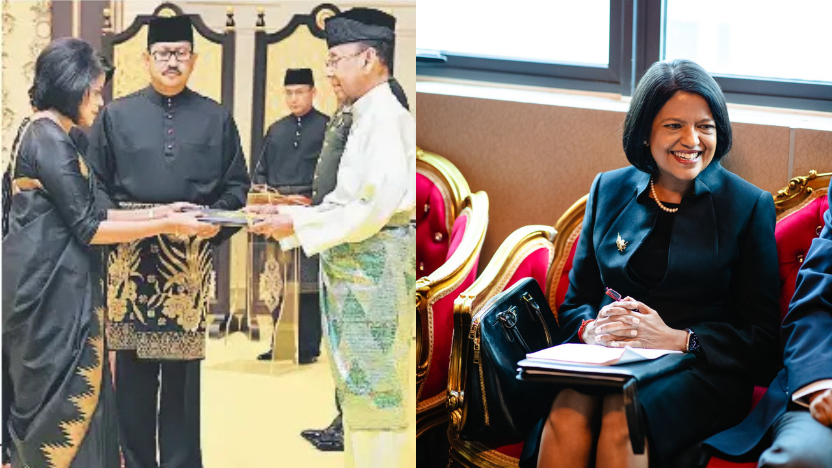
That one message for young women considering law is both realistic and empowering.
“I would advise them to explore and understand the profession they are embarking on. The rate of attrition is high amongst women legal practitioners in Malaysia.”
But she is clear about one thing:
“Never underestimate your own abilities as you are equally competent to your male counterparts.”
And perhaps most beautifully:
“The law is a career you should consider pursuing. It affords fulfillment at all levels.”
As Tan Sri Nallini Pathmanathan retired, Malaysia salutes not just a judge, but a trailblazer.
She entered the judiciary at a time when diversity was still evolving. She leaves it stronger, more inclusive and more representative than ever before.
For many young women in law, especially women of minority backgrounds and her presence on the Bench was more than symbolic. It was proof.
Proof that excellence transcends barriers. Proof that diversity strengthens institutions. Proof that leadership can be both firm and compassionate.
On this Women’s Day, as we honour women who have shaped our nation, we say thank you to Tan Sri Nallini Pathmanathan, for her intellect, her integrity and her quiet but powerful legacy.
Her judgments will remain in law reports. Her impact will remain in history. And her example will remain in the hearts of women who dare to dream beyond limitations.
Info Source / Image Credit : FMT , judiciary.uk , Brickfields Asia College/LinkedIn , PressReader , Mena FN